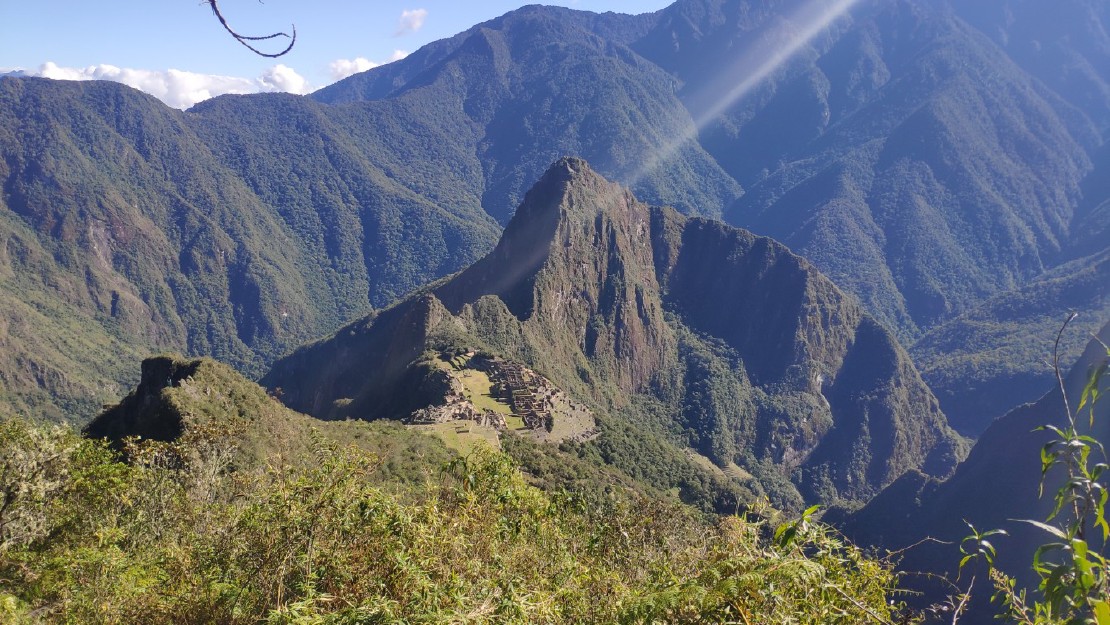
This was my four-week route through Peru: the northern mountains and coast, the desert south of Lima, Colca Canyon, Cusco, the Amazon and Lake Titicaca.
Affiliate disclosure: This article contains GetYourGuide affiliate links. If you book through one of them, I may earn a commission at no extra cost to you.
Part of a larger journey: Peru was the first part of my 53-day trip through South America, followed by Bolivia, northern Chile and Patagonia. Prices are approximate euro equivalents, checked in September 2026.
Itinerary done quick
Peru
| Day | Destination | Notes |
|---|---|---|
| Day 1 | Lima | Historic centre and Barranco |
| Day 2 | Huaraz | Town and acclimatisation |
| Day 3 | Pastoruri Glacier | Glacier day trip from Huaraz |
| Day 4 | Laguna 69 | Cordillera Blanca day hike |
| Day 5 | Laguna Paron | Lake and viewpoint |
| Day 6 | Trujillo | Centre and Huacas de Moche |
| Day 7 | Chan Chan | Archaeological complex |
| Day 8 | Huanchaco | Coast and surfing |
| Day 9 | Lima to Paracas | Lima museum and southbound bus |
| Day 10 | Paracas | Ballestas Islands and national reserve |
| Day 11 | Ica and Huacachina | Oasis, dunes and sandboarding |
| Day 12 | Nazca | Nazca Lines, aqueducts and cemetery |
| Day 13 | Arequipa | Historic centre, Ruta del Sillar and Santa Catalina |
| Days 14–15 | Colca Canyon | Two-day canyon trek, oasis night and return to Arequipa |
| Day 16 | Cusco | Inca centre and Sacsayhuaman |
| Day 17 | Rainbow Mountain | High-altitude day trip |
| Days 18–22 | Salkantay trek and Machu Picchu | Five-day trek via Humantay and Salkantay Pass |
| Day 23 | Sacred Valley and Ollantaytambo | Chinchero, Moray, Maras, Ollantaytambo and Pisac |
| Day 24 | Cusco | Final Cusco day and overnight bus to Puerto Maldonado |
| Days 25–27 | Amazon from Puerto Maldonado | Three-day lodge tour, river trips and forest walks |
| Day 28 | Amantani | Lake Titicaca and homestay |
Day 1: Lima
I technically arrived the day before, at night. I’ll assume you did too, to have a full day. With an additional afternoon, you can find more districts to walk to.
Ok, so to start directly. You reached Lima, want to get a feel of the city right away? Walk the cliffs! It’s the prettiest part. Additionally, you’ll be close to Barranco, worth it for the street art. See Barranco’s plaza, walk over the Bridge of Sighs, down Bajada de Baños and back along the cliff viewpoints. The lanes around the bridge have murals, old houses and small galleries.
After a morning walk along the cliffs, I recommend to continue to the Plaza Mayor, with the cathedral and the wooden balconies of the Archbishop’s Palace facing the square. Walk to San Francisco, then follow Jirón de la Unión past La Merced to Plaza San Martín. This is a roughly 3 km circuit, allow two hours minimum, perhaps three with stops along the way.
The guided visit inside San Francisco Monastery takes about an hour, through the cloisters, religious art and catacombs. Adult admission is 20 soles (5,10€).
It’s worth it, especially for the catacombs!
For the later parts of the evening, I personally went to the archaeological sight: Pucllana. It’s not open often, but if it does, it will be your first ruin in Peru!
Then, if you don’t want to waste time, head for a loop north to the Cordillera Blanca, one of the prettiest area in Peru.
Night buses to Huaraz leave Lima between 21:30 and 23:00. The journey takes about eight hours and tickets start at 40 soles (10,30€). Buses depart from La Victoria or Plaza Norte, depending on the operator.
For my previous night, I stayed in Waikiki Hostel in Miraflores, the best district of Lima. It has a rooftop and I received a lot of recommendations from travelers on their way out there.
Day 2: Huaraz
Keep the first day around Huaraz, at roughly 3050 m of altitude, you may need to acclimatize.
Note: I don’t, I discovered I had the genetics for altitude resistance for up to 5000m. But if you follow my itinerary, I’m going to push you to more than 5.2km of altitude.
A note for Huaraz, an earthquake and a landslide destroyed most of it, it used to be a very pretty town. Used to.
Alright, let’s visit.
Begin at Plaza de Armas and perhaps the Regional Archaeological Museum of Áncash (I didn’t visit, i’m a bit tired of museums), then walk through the market streets towards the La Soledad neighbourhood. Once the city seen, go back to the Plaza de Armas to head to a small hike in the Cordillera Negra: Laguna Wilcacocha. It is a good acclimatization hike with views across to the Cordillera Blanca. Take a number 10 minibus (colectivo) from the main road near in Huaraz** to Puente Santa Cruz in Chiwipampa. The hike took me a little less than 3:30 both ways, including a lunch breaks. The path is easy to follow (And you may encounter people preparing the Santa Cruz Trekk here)
There are lots of dogs along the trail, especially at the top. TTTThe ones I encountered weren’t as aggressive as the reviews said, just hungry. I came prepared and had cheese and ham. So I got surrounded by friendly dogs quickly (It’s a bit reckless, I guess, but we (dogs and I) had a great time).
I booked the next three Cordillera Blanca day trips through the hostel for about 10€ each, returning to the same bed in Huaraz each evening. Convenient.
I stayed at Krusty Hostel B&B, it was cute, nice and well located (And have a variety of room types!)
Day 3: Pastoruri Glacier
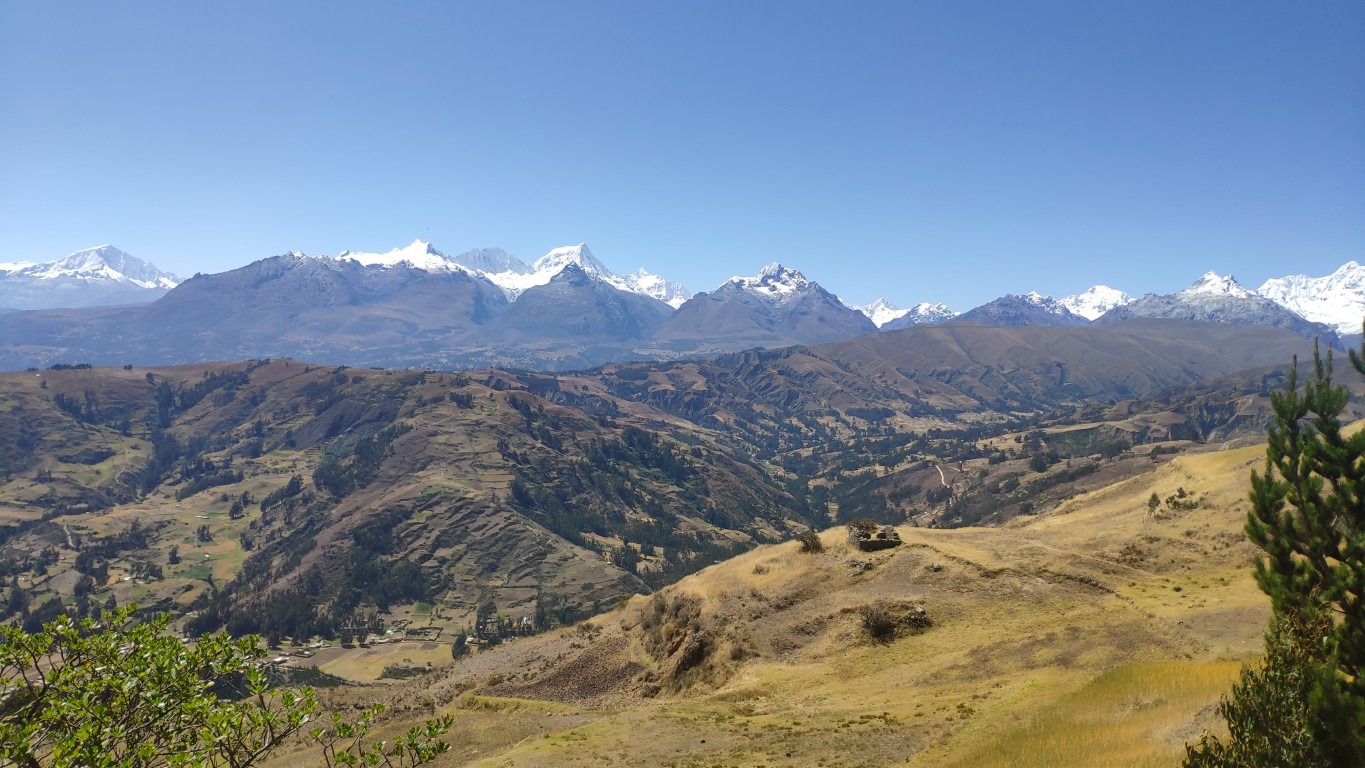
So, I booked this one through the hostel, as said before. It was super convenient!
Note: You’ll need to buy the admission to the park, an additional fee. The current entry fee for Huascarán National Park is 30 soles (7,70€) for one day or 60 soles (15,40€) for two to three days for foreign visitors. The longer ticket covers both Pastoruri and Laguna 69.
The bus picks you up at your place around 08:30–09:00 and returns to Huaraz around 17:00–18:00. (It was a fairly large bus, the town was filled with hikers at this time of the year!), and a fair lot of driving, almost 4 hours spent on the road.
Hence, the excursion went south from Huaraz towards Cátac, then into the high plateau below Pastoruri. The road stops include the huge puya raimondii plants and the mineral springs around Pumapampa. Then, you head up to 5000m for an hour long walk around the Glacier. THat’s when altitude sickness starts to hit.
You can also compare Pastoruri day trips from Huaraz on GetYourGuide (affiliate link); advertised options start around 26–31€. Some Huaraz departures include the park ticket; others cover transport and guiding only.
My opinion? Not bad, but the glacier is seriously receding, it’s quickly disappearing. And this was also my first 5k altitude experience.
Day 4: Laguna 69
Hotel pickup is at 04:30–05:00 Return to Huaraz is around 18:00–19:00. Almost 6 hours of driving in total (Not because it’s far, just that the roads are difficult, I recommend sleeping on at least one way)
The trail begins around 3900 m, follows a stream through a broad valley and passes waterfalls before the first sustained climb. After a flatter basin, the final zigzags reach Laguna 69, at about 4600 m, below the ice and rock of Chacraraju. The complete walk is roughly 14 km, with around 700 m of ascent. Expect 5 or 6 hours of hiking, plus some time at the Laguna.
The multi-day Huascarán ticket from Pastoruri also covers this hike. A separate day ticket costs 30 soles (7,70€).
This Laguna 69 and Llanganuco day hike from Huaraz (affiliate link) is an advance-booking option (The listing advertises park admission and minibus transport from Huaraz).
Day 5: Laguna Paron
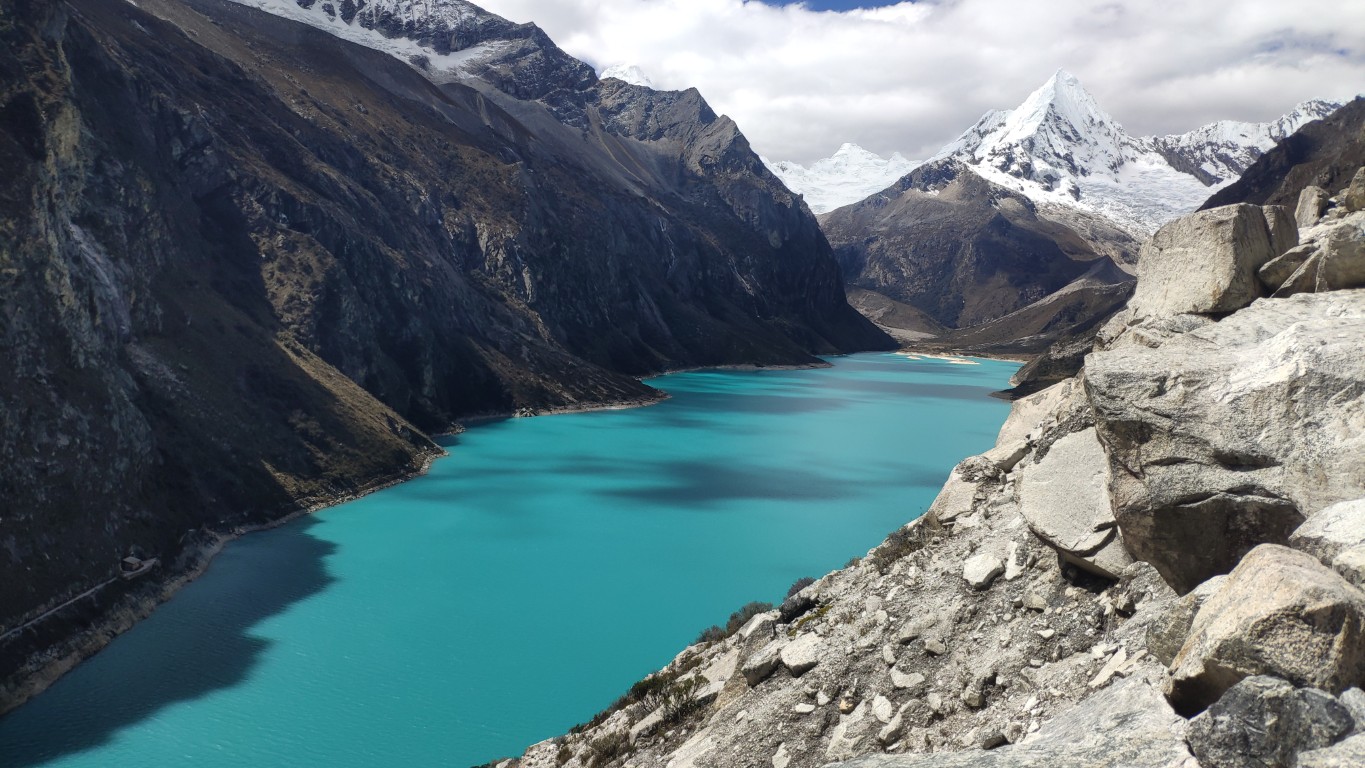
Let’s go for the last excursion: Laguna Parón, at 4185 m. Pickup was around 06:00AM And returns around 6:00PM
After an almost 3 hours drive, walk along the shore, then climb the rocky path to the western viewpoint, an 1.5 hours hike. From there, the turquoise lake stretches towards the snowy Pirámide de Garcilaso. There are others small hikes around and there were a few stops along the way, but this was my least interesting day in a way, while having the prettiest scenery.
Since, I don’t like wasting time, straight away I continued north for the rest of my small loop. If you don’t want to see Trujillo, I recommend going back to Lima for an extra day.
You can take a night bus to Trujillo, they departs around 10PM and the journey takes around 8 hours, with tickets from 55 soles (14,10€). They all departs from pretty much the same place (where you arrived, normally)
Day 6: Trujillo
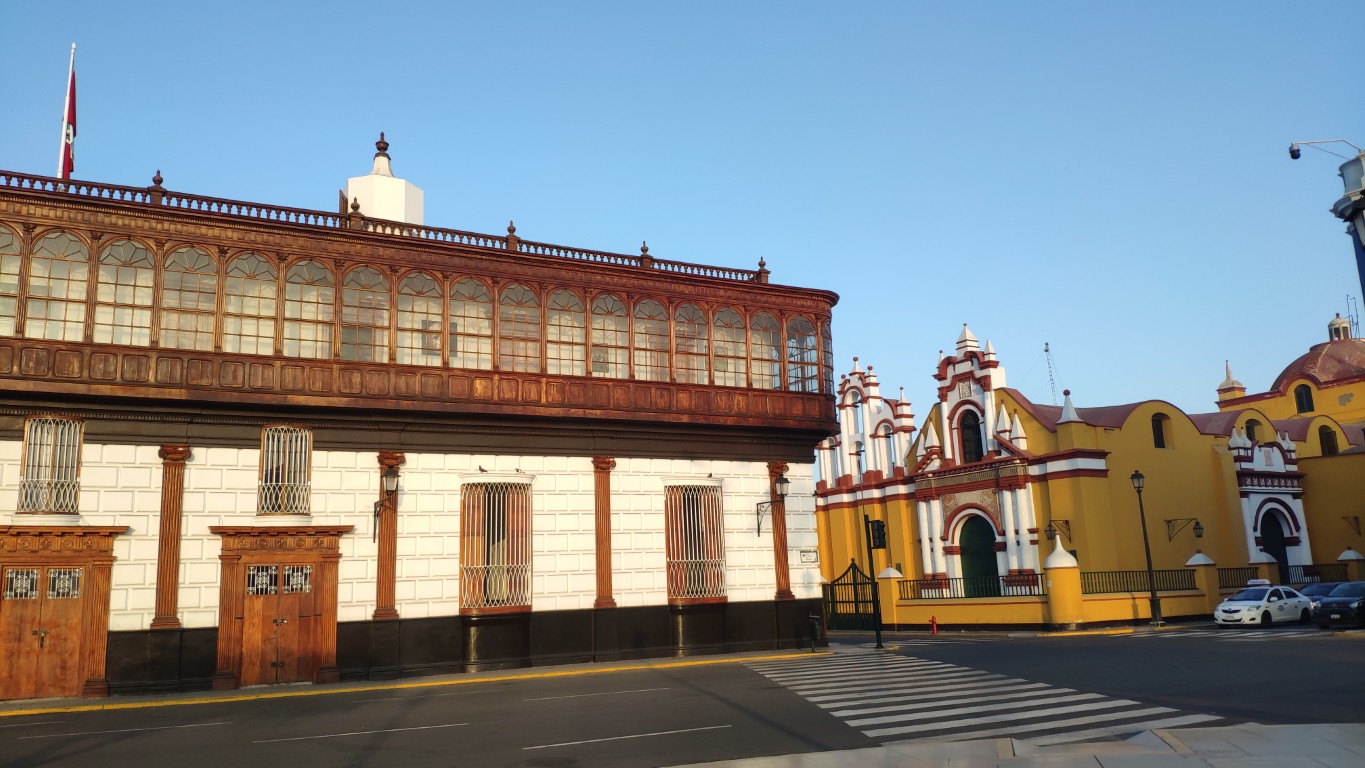
Spend the morning in the colonial centre: Plaza de Armas, the yellow cathedral, Jirón Pizarro and the façades and courtyards around Casa Urquiaga and Palacio Iturregui. The centre is compact enough for a 2–3 km walking loop. Its painted houses and balconies makes it a good visit if you like colonial architecture.
In the afternoon, go south to the Huacas del Sol y de la Luna. Ideally with a tour, to make transport convenient and have a guide, they are in small groups, can be easily found in the city, even the same day and aren’t expensive.
I like using local operators for tours, and not to cheap out on them, having a guide is a nice thing, and a lot of families depends on this kind of income.
Start with the Museo Santiago Uceda Castillo, then join the visit into Huaca de la Luna, where excavated temple levels reveal painted reliefs, repeated animal motifs and ceremonial spaces. Huaca del Sol is seen from outside. It’s 2–3 hours for the museum and archaeological visit, plus an hour or so of transport. SO half a day.
Return to Trujillo for the night, well needed after so man night buses (and buses, lol)
Day 7 & 8: Chan Chan & Huanchaco
Go west from Trujillo to Chan Chan, the adobe capital of the Chimú kingdom. Begin with the site museum for the model of the city and its ceramics, then continue to the Nik An palace complex. The tall earthen walls hide ceremonial plazas, corridors with fish and bird reliefs, lattice-like friezes and a large water reservoir.
Allow 3–4 hours for the museum, transfer and palace walk.
Take a bus towards Huanchaco on Avenida Mansiche and get off at Chan Chan. The ride takes 20–30 minutes and costs around 3–5 soles (0,80–1,30€).
After Chan Chan, continue to Huanchaco for the night. Take a Huanchaco-bound bus or combi from the main road towards the coast (I just asked around and got one quickly, the combi I took in Huaraz was actually headed to Huanchaco).
I then spent the evening walking around Huanchaco, past the pointed caballitos de totora (The reed fishing craft pulled up on the beach) and along the sea.
The next day, I spent the morning learning how to surf, but you may very well just enjoy the beach and the weather.
Then my afternoon was spent going up the hill and seeing the old parts of town. Not really interesting, but I needed to rest a bit. If you like surfing, don’t hesitate to enjoy more days.
I stayed at Totora Surf Hostel, they provide surf lessons (Extra cost, obviously)
Day 8: Huanchaco
I went surfing in Huanchaco before returning to Trujillo for the night bus south.
At Ola Surf House, a group lesson lasts 2:00 and costs 90 soles (23,10€), including board and wetsuit. An individual lesson is 120 soles (30,80€), and daily board-and-wetsuit rental is 45 soles (11,50€).
Return to Trujillo for a bus to Lima. The local bus from Huanchaco takes 0:30–0:45; budget 3–5 soles (0,80–1,30€). Evening departures run roughly 19:00–23:15, taking 9:30–11:00; advertised fares start at 40 soles (10,30€), with more spacious seats costing more. Services use Terrapuerto Trujillo or private terminals such as those around Avenida América Sur.
There, I took a sleeping pill from a stranger, best sleep in my life. Don’t do that, obviously.
Day 9: Lima to Paracas
After the overnight bus, use the morning for Museo Larco in Pueblo Libre. Its galleries cover pre-Columbian ceramics, textiles and metalwork; the visible storage collection makes clear how much material sits beyond the main exhibition. Allow 2:00, including the garden.
The museum is at Avenida Simón Bolívar 1515, open daily 09:00–19:00. Adult admission is 45 soles (11,50€) online or 50 soles (12,80€) at the door. The museum lists buses 1013, 1253, 1234 and 1236 from La Doce, following Avenida Bolívar. Get off at Aragón / Juan Valer Sandoval, then walk to the entrance on Calle Navarra.
It’s really worth it and a must in Lima! Hence why I had to add it somewhere.
Alright, then continue by bus to Paracas, about 4:00 south. Advertised fares start at 45 soles (11,50€). Boarding locations include La Victoria/Nicolás Arriola and Atocongo. The destination is Paracas/El Chaco; some other services stop on the highway near Pisco. They departs pretty much all the time, there are like 3 different companies doing it, for the afternoon, you can catch them from 12:30 to 16:00 or something.
On arrival, walk the El Chaco waterfront between the harbour, fishing boats and restaurants.
I slept in Paracas Backpackers House, one of the two big hostel. It didn’t leave me any memories, but I gave it a really good rating online, so there’s that.
Day 10: Paracas
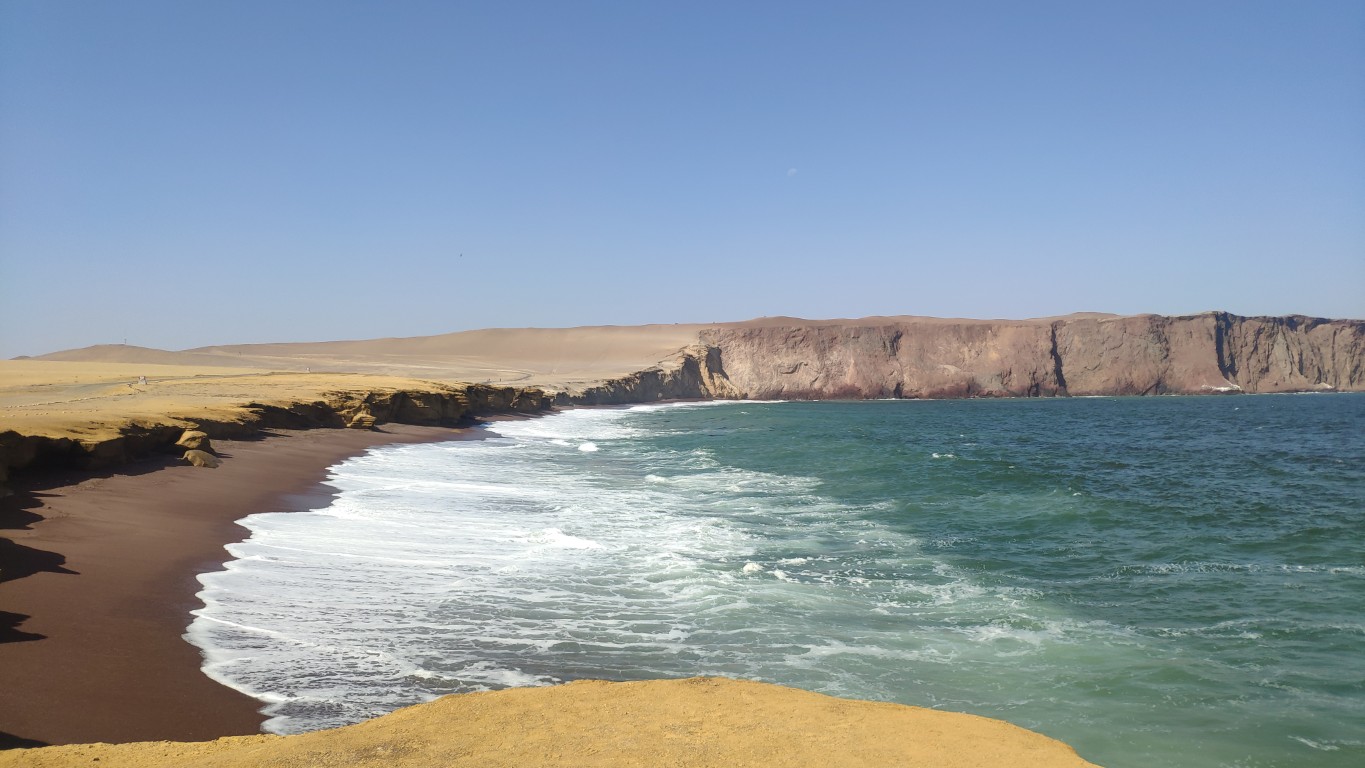
Take the morning boat from Muelle El Chaco to the Ballestas Islands. Typical departures are 08:00 and 10:00 and the outing lasts around 2:00. The boat passes the huge Candelabro geoglyph on the peninsula, then approaches the rocky arches and ledges of the islands, where sea lions, seabirds and Humboldt penguins can be seen. Passengers remain aboard.
A local operator advertises the boat at 40 soles (10,30€). The SERNANP combined Ballestas–Paracas ticket is 17 soles (4,40€); a port charge is additional. The boat operator quotes 16 soles (4,10€) for its island-only admission and port charges together.
Afterwards, join a van circuit or borrow a bike through Paracas National Reserve, normally 3–4 hours long from El Chaco. Stops commonly include the La Catedral viewpoint, Playa Roja and the fishing settlement of Lagunillas. Walk the designated cliff viewpoints and look down towards the red sand and the meeting of bare desert with the Pacific. The reserve’s published visiting hours are 09:00–16:00, but this is more like the entrance time, since I finished around 5PM.
I went by bike, I got a cheap one through one of the many shops and did it all this way, it was a bit more intense than I thought, but the bike was beyond shitty and I bike once every couple years or something like that (I run, but never bike…)
This Ballestas Islands and Paracas National Reserve tour (affiliate link) combines the boat and road circuit. Reserve admission and the port charge may be additional, depending on the package. Lunch at Lagunillas is generally an additional expense.
Worth it? Yes for both. Wildlife from the boat tour is good to look at, it feels fresh and refreshing and even the landscape are good. But the jewel is the Paracas National Reserve. Not much wildlife in this one, but awe-inspiring landscapes and a nice escape from the ever rugged terrain found everywhere in Peru.
Day 11: Ica and Huacachina
Take a morning bus from Avenida Paracas to Ica (1h10 away) or book a tour from Paracas. I did the later (For convenience).
So, before going to the oasis, whether you take the bus or tour, you should make a short circuit of Ica’s Plaza de Armas and the streets towards the Santuario del Señor de Luren. It won’t take much more than 1 hour.
From what I remember, the tour went this way: Departs around 9, arrive in Ica at 10:30 after pickup, then a tour of the city before going to a pisco tasting tour (You also see the making of wine, pisco, the different kind that exist and have lunch).
(I wasn’t very religious at that time… I’ve stopped drinking after this trip) Btw, fun fact, I spent the next 4 or 5 days continuously drunk. I’m not proud.
After lunch and wine, it was close to 3PM (Time flies), an additional 30 minutes was spent to go the famous Huacachina oasis.
So whatever you do, head to Huacachina and walk around the lagoon, squeezed between the dunes. The lakeside loop takes about 0:20–0:30; climbing partway up a nearby dune gives a wider view over the oasis.
The main outing is a dune-buggy and sandboarding trip, usually starting around 16:00–18:00 for sunset. See this two-hour sunset buggy and sandboarding tour (affiliate link) (starts in Huacachina) if you want to try Sandboarding.
Also, budget roughly 25€ from Paracas, probably 15 to 20€ from Ica.
Then, back to Ica’s bus terminal and continue to Nazca, approximately 2:30h away. The tour (Booked from the hostel in Paracas, actually) Late-evening buses are listed from 100 soles (25,60€) online (But it was certainly far less than that).
I reached Nazca around 22:30. The city isn’t very lit, so… It could actually be more convenient to return to Paracas or sleep in Ica for an early morning departure. But I wanted an early morning flight over the Nazca lines.
I stayed in Nanasqa hostel. Got drunk on my evening of arrival, while I was already drunk.
Day 12: Nazca
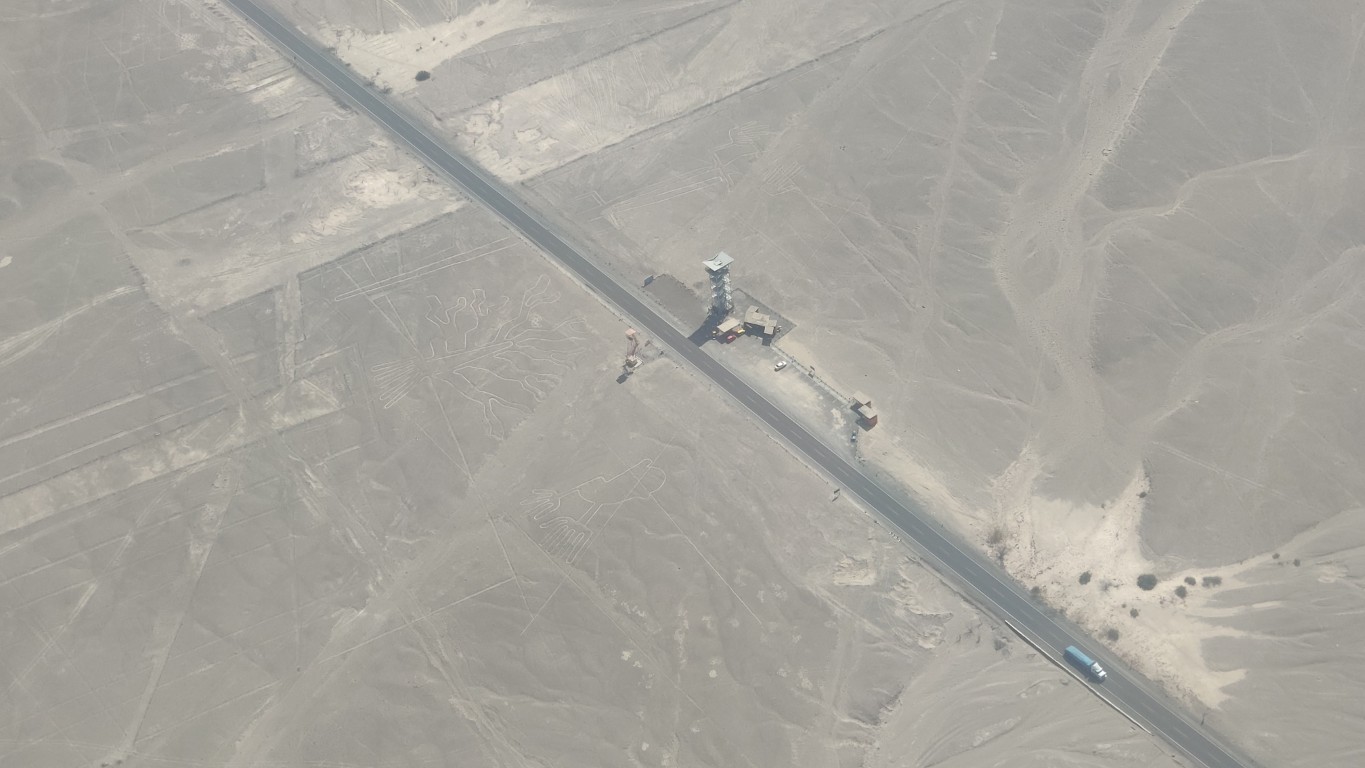
For this day, I took a flight over the Nazca Lines.
The flight leaves María Reiche Airport, about 0:15 of driving to the south of Nazca. A standard flight lasts 30 minutes, turning over figures such as the hummingbird, monkey, spider and condor, along with enormous straight lines and trapezoids. I remember the transportation for the aerodrome being super easy. Was it done by the aerodrome itself? Probably. I don’t remember. If you book in advance, for sure they are going to bring you there.
Nazca Flights currently advertises its classic flight at 77€, or 86€ in its stated high-season period, including a transfer from a Nazca hotel or bus station. Its earliest flights start around 09:20. Note: Add 80 soles (20€) in local charges: airport use plus the tourist ticket. That makes the regular flight approximately 100€ altogether.
Was it worth it? I don’t think so. You see lines from above, get the experience of a flight across a barren landscape. For sure it’s the best way to see the lines, but you can also see them from the ground. I wished to do it, so I did, but… When you factor 100€ for 35 minutes of activity and 2 hours spent in total… I rate it 8/20. It will depend on you and only you.
This Nazca Lines flight departing from Nazca (affiliate link) departs from Nazca. I share this because I like money sharing.
In the afternoon, visit Cantalloc, about 4 km east of town, it’s not a long walk from the center, there is possibly transport, but I walked.
Walk between the spiral stone access shafts and the irrigation channels that supplied water to the valley. Allow an hour on site and note that admission costs 10 soles (2,60€) and also covers Paredones.
It was free for some reason when I went. Or the guy didn’t want to make me pay? I admit I didn’t understand.
Another stops in Nazca are the different viewpoints to see the lines from the ground. It’s nice to get different perspectives. But once of them cross a slum.
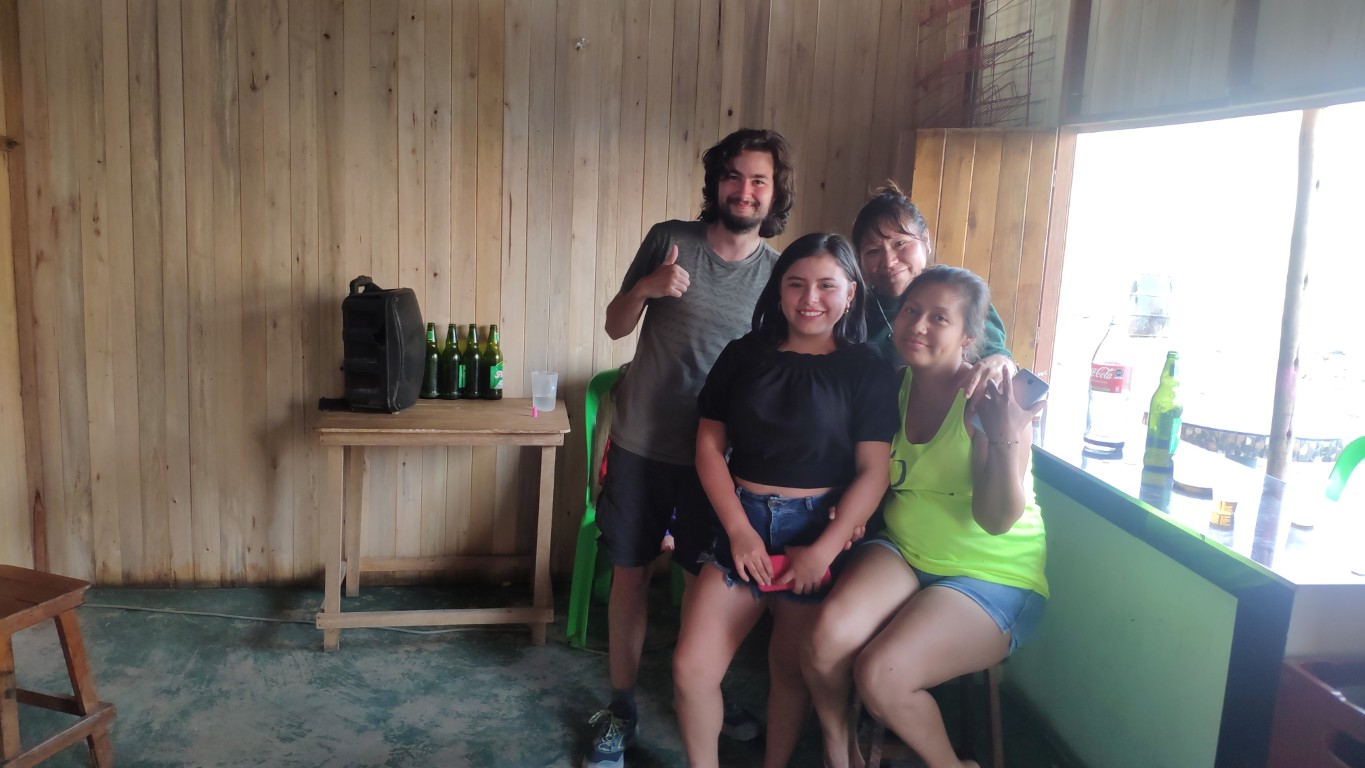
See? I got lost walking through the slums on the outskirts of Nazca, it was on the way out from the viewpoint of the lines or something like that. Those folks got me drunk on wine, I had to make my way back to the hotel even drunker than the day before.
So, drunk I made my way back, and somehow was able to retrieve my bags and head to the bus station for a late night departure. Around 22:00 or something? I know buses also leave at 21:00 from Nazca terminal, hence I headed to Arequipa. The cost is around 100 Soles (26€), it lasts 9 hours. Another long day/night! Being drunk helped, I have zero memories.
Day 13: Arequipa
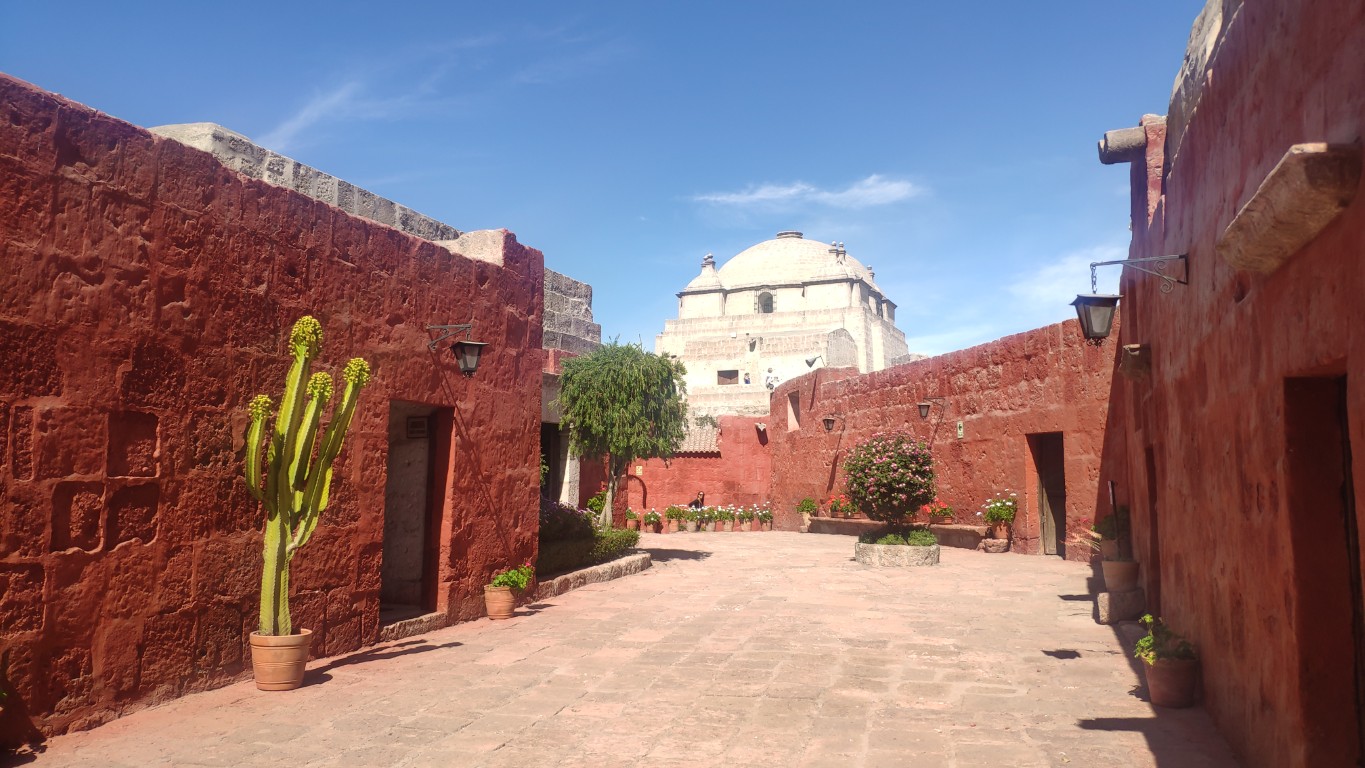
From Arequipa’s Terminal Terrestre or Terrapuerto, take a city bus towards the historic centre. I dropped my bags in my hostel (Flying Dog Hostel), you should do the same, get some rest and… Ready yourself, Arequipa is beautiful and deserves days!
Begin at Plaza de Armas, with the cathedral along one side and arcades around the others, then walk to the richly carved façade and cloisters of La Compañía.
I warmly recommend doing the visit to Santa Catalina Monastery, it takes about 2 hours, perhaps even 3. Inside are narrow red and blue streets, kitchens, cells, washing areas and quiet courtyards: it feels like a small walled neighbourhood within the city. Adult admission is 50 soles (12,80€).
This was my highlight of Arequipa! Absolutely stunning, and gosh, the colors!!
Because I didn’t have that much time, I booked at 13:00 a tour starting at 14:00 (yes) not far from the main thoroughfare of Arequipa (Where I ate the famous Arequipan dish: Rocoto Relleno). Hence, I ate, went straight to see the Ruta del Sillar.
The excursion visits the Añashuayco quarries, where stonecutters work the volcanic rock used in the city’s buildings. The outing continues to Culebrillas for a walk through the narrow ravine and its petroglyphs. It takes about half a day. On the way back, we saw some viewpoint with the volcanoes in the background.
I liked it, I had a nice group, that wasn’t too slow and we visited things properly (Hence the additional time for viewpoints).
This Sillar and Culebrillas excursion (affiliate link) lists collection from accommodation around 08:50, so it can work in the morning.
This was my visit of Arequipa. In one word: Rushed. My mom did the visits over two days, following my recommendation, IIRC, she found it too slow, too relaxed. She didn’t like Ruta Del Sillar either, the group she had spent so much time in the quarry they had to rush the canyon in less than half an hour.
Yes, I just included an indirect review from my mom, if she reads this: Hi mom! Sorry if I wasn’t accurate enough.
Days 14 and 15: Colca Canyon
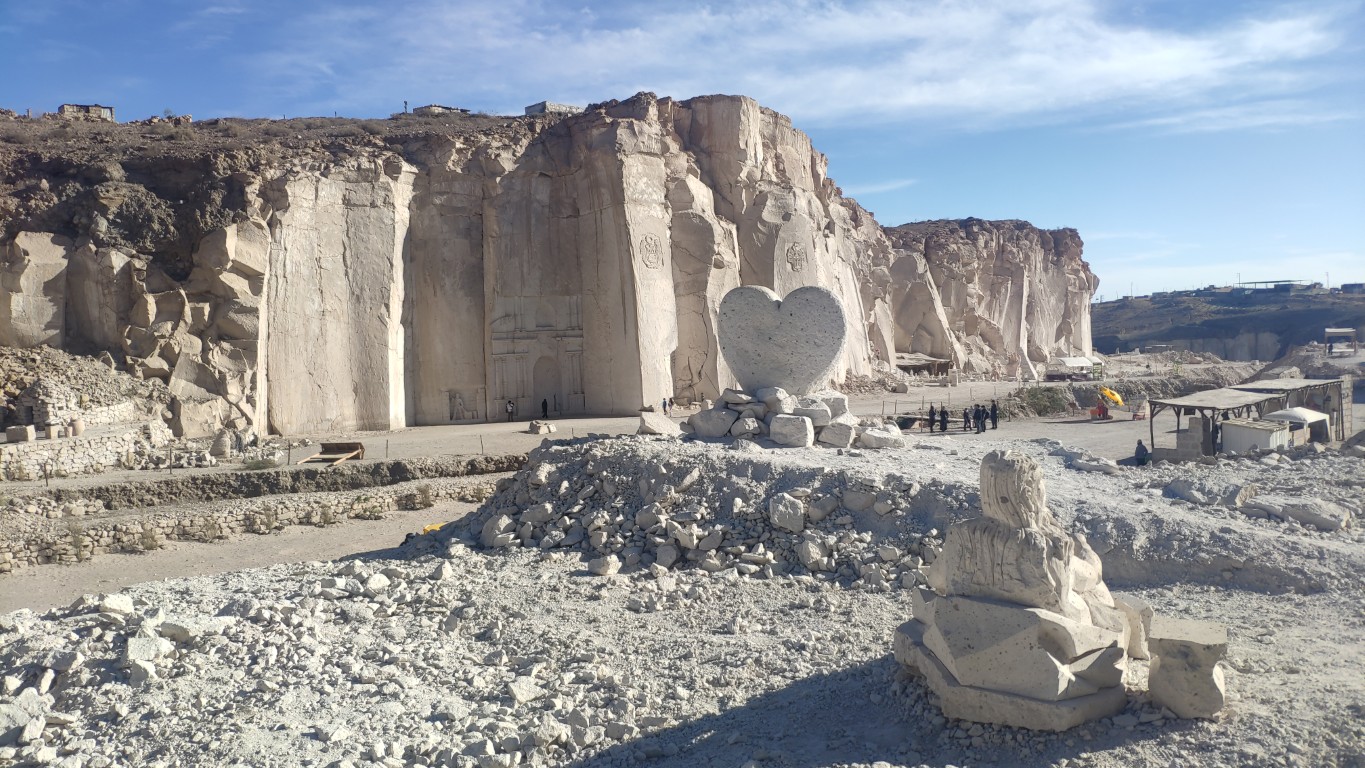
I did Colca as one two-day trip from Arequipa, spending the night at the oasis on the canyon floor.
Absolutely worth it, if you wondered. And yes, I say that before we even started. If you go to Arequipa, it’s probably for the Colca Canyon. It’s hard to photograph due to the harsh light, but is a sight for your eyes. You like nature? Condors? Plants? Hikes? Altitude? Well, it’s even more for you. Tours are between 1 and 3 days (1 day means not going inside the canyon and spending like 9 hours driving, 3 days means an extra day in the hot spring. Now you know why I did two.)
Anyway, for the practical info: Trekking tours usually pick up from central hostels and hotels in Arequipa around 03:00–03:30 (yikes). The drive goes through Chivay towards Cruz del Cóndor, around 5–6 hours including breakfast and stops. At the lookout, scan the canyon walls for condors riding the rising air, then continue towards Cabanaconde and the trailhead.
The common two-day route descends through the canyon villages to Sangalle oasis. It’s a long walk, much of it steep descent, with an initial drop of about 1000 m.
Expect it to last the whole day. You need to earn the rest in Sangalle!
The next morning, start before sunrise, normally around 04:00–05:00, for the sustained climb to Cabanaconde. Allow 2 to 4 hours for the ascent (Did it in two, but it’s not a competition), followed by breakfast. The return drive goes through Chivay and the high plateau; many programmes offer a hot-spring stop before reaching Arequipa around 18:00.
Expect a total of 100€ for two days, bumped in price by the 20€ Colca Entrance Ticket.
This two-day Colca Canyon trekking tour from Arequipa (affiliate link) follows the descent and Sangalle overnight. It starts and finishes in Arequipa.
Back in Arequipa, I took the night bus to Cusco. Services from Terminal Terrestre or Terrapuerto include 20:30–21:00 departures. The journey takes 10 hours, with fares starting from 50 soles (12€).
Day 16: Cusco
Cusco is my favourite place in Peru. It’s absolutely worth the hype and is best kept last because it’s a highlight. Some visitors in Peru only do the Cusco region, you’ll get to understand why. Cusco (The town, not the Disney character) is beautiful, filled with indigenous culture. Seriously it should have been Peru’s capital since it’s such a cultural powerhouse and so much more memorable than Lima.
For the record, I arrived from a night bus, very early. Hence the long day! For a more “chillax” rhythm, add more time in the Centro historico and go to Sacsayhuaman and stuff on another day (And add more walking, perhaps to Apu chakam, right next to it).
Alright, I’ll say to begin by buying the integral Cusco tourist ticket. It costs 130 soles (33€) for a foreign adult, valid ten days.
Starting it on this day will cover Sacsayhuamán for the afternoon, the cultural performance an evening, the Sacred Valley on Day 23 and the included museums for this day and those I added in Day. AKA: A lot.
Be careful, the paper is fragile, keep it well, mine got drenched due to heavy rain going through my bags. It was barely usable after my Machu Picchu hike.
Tickets are sold in person at Avenida El Sol 103, normally 07:30–18:00, and at most included archaeological sites. (Note: The Qorikancha site museum is included; admission to the temple/Santo Domingo complex is separate.)
That is done? Let’s go. Honestly, do the classic stuff, start in lively Plaza Túpac Amaru, right next to the bus station, then to Plaza de Armas, then walk down to Qorikancha (Most beautiful building in the city, imho), where Inca stonework forms the base of the Santo Domingo complex. Then continue via Hatun Rumiyoc, the twelve-angled stone and the uphill lanes of San Blas, where you will find one of the best Mirador. Allow 2–3 hours for the streets and squares, with additional time for an interior visit to Qorikancha.
For the afternoon, take a Cristo Blanco or Señor de Huerto bus from Mercado Rosaspata to Q’enqo, then walk towards Sacsayhuamán. This is a nice walk to multiple sites included in the ticket: Q’enqo, Pukamuqu (The Redemptor Christ), Qhalispuqyo and Sacsayhuamán. Allow at least 2 hours there. From Sacsayhuamán, descend on foot through San Cristóbal to the centre (Another Mirador).
In total, with the bus, the way back on foot and the stops, it took my friend and I around 4 hours.
I stayed in Secret Garden Hostel. Fun times, great place.
Day 17: Rainbow Mountain
Leave Cusco before dawn for Vinicunca, Rainbow Mountain. Shared tours generally collect from central hotels around 04:00–05:00, drive 3–4 hours with a breakfast stop, and reach a high trailhead for the walk to the striped ridge. The viewpoint is approximately 5 000 m, with Ausangate (the real name) beyond it on a clear day.
Allow 1:00–2:00 uphill, time at the viewpoint and 0:45–1:30 back, depending on the road access used and your fitness level.
Personally, I carried someone up for a long while, before realizing she would be better off with a donkey (Making it easier for me to run to the top) Running to the top while others were struggling was a real wow factor for me, I thought I was terribly out of shape. Running half the way up was 20 minutes max. The walk crosses open grazing country before the final steeper climb. Most tours also included the Red valley, for an hour or two of walking, it’s just as nice, especially after spending most of the day in transport.
This Rainbow Mountain and Red Valley day trip with meals (affiliate link) is currently advertised on GetYourGuide’s Cusco page from 20€. Allow an additional 30 soles (7,70€) as an entrance budget unless the selected option includes it. Typical return is 17:00–18:00.
After Rainbow Mountain, I returned to Cusco for the cultural performance at Centro Qosqo de Arte Nativo.
Centro Qosqo de Arte Nativo, at Avenida El Sol 872, presents regional music and dances, with traditional costumes and live accompaniment. Really nicer than I thought it would be. It went from 19:00 to 20:15 (So, arrive around 18:45 to have good seats). Luckily I returned not too late from Ausangate and had the time for a shower and the walk there without issues. Entry is included in the integral tourist ticket, most folks seems to skip it, I’d say it’s a mistake, support artists!
Days 18 to 22: Salkantay trek and Machu Picchu
My five-day Salkantay booking included transport from Cusco, food, a guide (El famoso Steven Tyler!!!) and the Machu Picchu reservation.
I went with Machu Picchu reservation, but can’t recommend them due to what they did to Steven. Awful stuff.
The first day of my trek passed Humantay Lake before the first camp. Typical five-day departures collect in Cusco around 04:00–05:00, with a drive of 3–4 hours through Mollepata towards Soraypampa. From the valley, the lake walk climbs for roughly 1:30–2:00, reaching turquoise water below a steep glacier face at about 4 200 m. Descend to the valley camp afterwards; the precise campsite varies by operator.
The next day crosses Salkantay Pass, the highest and coldest part of the trek. The ascent leads into a bare basin below Salkantay, then reaches the pass at approximately 4 630 m. Beyond it, the route descends through high grassland towards Wayracmachay and warmer vegetation around Chaullay. Expect roughly 8–10 hours on foot on a conventional itinerary, with substantial descent after the pass.
Below the pass, the landscape changes to cloud forest and cultivated slopes. Follow the lower valley paths towards La Playa, passing streams, small farms and increasingly dense vegetation. Typical programmes spend 5–6 hours walking and overnight around Santa Teresa or Lucmabamba, sometimes using a short vehicle transfer between sections.
The final approach to Aguas Calientes varies between five-day routes. An itinerary through Llactapata climbs an old stone path through forest to ruins with a distant view towards Machu Picchu, then descends to Hidroeléctrica. That adds several hours before the final 10 km walk, taking roughly 3:00 beside the railway towards Aguas Calientes (Some packages instead transfer towards Hidroeléctrica and omit Llactapata).
This five-day Salkantay trek to Machu Picchu (affiliate link) advertises the Humantay, pass and Llactapata route, starting from 343€. The return train costs extra on the cheapest option. The listing also identifies a 20 soles (5,10€) Mollepata/Humantay charge.
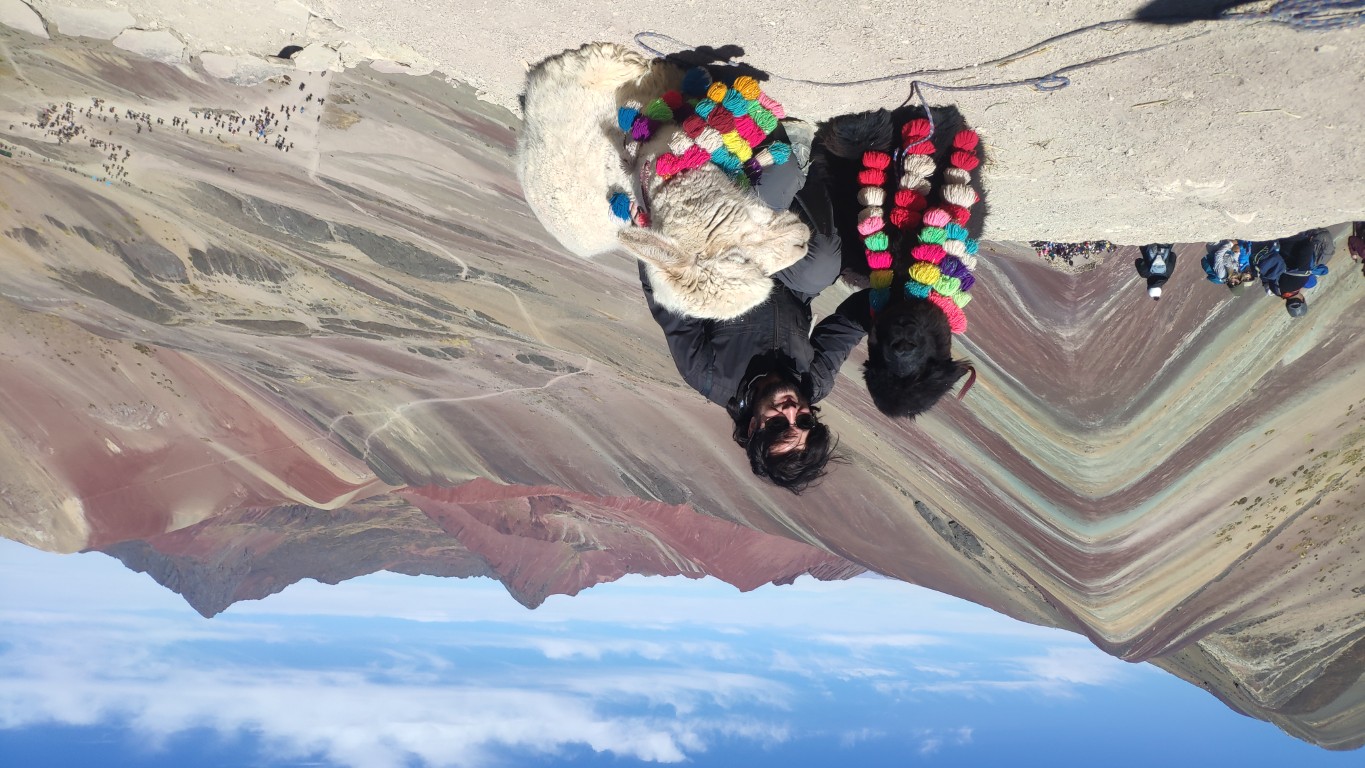
The following morning, I entered Machu Picchu with the reservation included in my trek package. But this wasn’t easy. You wake up very early, then walk to the entrance (Around 1 hour) to get to the thousand something steps. Walking up the steps takes approximately 1:00–1:30. But after so many days of walking… It might be painful. Also, be careful of all the dogs! Dogs are running to the top to, since it’s some kind of social fight club for dogs (?what the heck, really?)
Then, you reach the top. Enter Machu Picchu being one of the first group. There are multiple routes, the guide is there for 2 hours top (Got a limit), also, if nothing prevents you from doing another route afterwards (ie: Being allowed in another route), do enjoy more time in! Important: if going back by bus, you’ll have to leave by 3PM or something, check with your guide, the bus is far away.
And… Wow, fucking wow. Almost 5 days of walking, entering the site in the dark, walking to a terrace, then waiting 10 minutes to see the view uncover was magical. The sun rose, the mist appeared and shone in a faint pink hue, then another 10 minutes and everything (including the mist), mouths were agape. Absolutely incredible, a core memory. Thank you Steven Tyler (the guide) for this trip!!
I also took the time to climb Mount Machu Picchu (IIRC), but not all the way to the top due to time constraint, I did 80% before having to go back to catch the bus in time. In the end, I was only 30 minutes early.
On the way back, I walked the tracks back for a bus to Cusco. Then, once on the bus and two hours in, there was a landslide and we waited 3 hours until the workers dynamited away the debris. Fucking hardcore. And efficient. 3 hours to clear a whole landslide!!
Ok, sorry for the descriptive stuff, I hope it’s helpful, but I’m gonna state here more useful (?) things Is it worth doing 5 days? Yes. It the walk nice? Absolutely! Despite a day of heavy rain, it’s many memories and one of the world’s best hike Worth the price? 250€ for 5 days and the Machu Picchu ticket? Fucking yes it is! Even for 350€ it would be worth it. How’s the weather? Ever changing. One day we went from a dry(ish) 0°C with small avalanches and hail to 30°C wet and filled with mosquitoes. Harsh on the body.
Day 23: Sacred Valley and Ollantaytambo
The Sacred Valley day includes Chinchero → Moray → Maras salt mines → Ollantaytambo → Pisac, with lunch in or near Urubamba. Leave Cusco around 06:30–07:00 on a shared tour.
At Chinchero, walk through the old village to the Inca terraces and plaza, then visit a weaving workshop to see how wool is spun and dyed. Allow about 0:45–1:00. The drive from Cusco takes roughly 0:45–1:00, then another 0:30–0:40 leads towards Moray.
At Moray, follow the permitted paths around the enormous circular terraces, descending in concentric rings into the ground. Allow 0:30–0:45 for the viewpoints and walk. Continue 0:20–0:30 to the Maras salt mines, where thousands of shallow white and brown evaporation pools step down the hillside. The visitor route stays at the overlooks and access paths above the working salt pans.
After lunch, continue to Ollantaytambo. Climb the broad fortress terraces towards the Temple of the Sun, then explore the water channels and ceremonial fountains below. The old town below has narrow Inca streets, with water still running in stone channels beside the houses.
Chinchero, Moray, Ollantaytambo and Pisac are covered by the integral ticket bought on Day 16. Without that pass, the Sacred Valley partial ticket costs 70 soles (17,90€) and lasts two days. Maras is separate: 20 soles (5,10€) in the current tour listing.
Continue through the valley to Pisac for the archaeological site above town, with its broad agricultural terraces and stone buildings overlooking the valley. The tour then returns to Cusco.
This Sacred Valley tour with Moray and the Maras salt mines (affiliate link) continues to Pisac after Ollantaytambo and returns to Cusco. The full circuit takes 12:00–12:30. Budget approximately 30–45€ for the tour, with archaeological admissions and Maras charged separately unless included in the selected option.
Day 24: Cusco
Start at San Pedro Market for the fruit, bread, cheese and cooked-food stalls. Walk back through Plaza San Francisco, then visit the Museo Histórico Regional in the house associated with Inca Garcilaso de la Vega. Its displays connect the region’s archaeological history with colonial Cusco. Continue to Plaza Regocijo and the Museo de Arte Contemporáneo for a smaller art stop.
Both museums are included in the integral tourist ticket, which is still within its ten-day validity. Allow around 1:00–1:30 for the regional museum and 0:30–0:45 for the art museum. The market and central streets are free.
In the afternoon, walk south along Avenida El Sol to the Pachacútec Monument, around 0:30 from Qorikancha. The monument has a small historical display and a viewpoint above the busy roads of modern Cusco; its admission is also on the tourist ticket.
This was voluntarily a chill day, anything you didn’t do the first day in Cusco can be done here. Personally, I used some of the time to run in the city, because I could; I felt so light after the hike.
Take the overnight bus from Cusco’s Terminal Terrestre to Puerto Maldonado. Maldonado Tours lists a 19:00 departure, Palomino 20:00 and Transzela 21:00. The journey takes 9–11 hours, with tickets from 50 soles (12,80€). Arrival is at the Puerto Maldonado terminal, where the lodge operator can arrange the start of the Amazon booking.
Days 25 to 27: Amazon from Puerto Maldonado
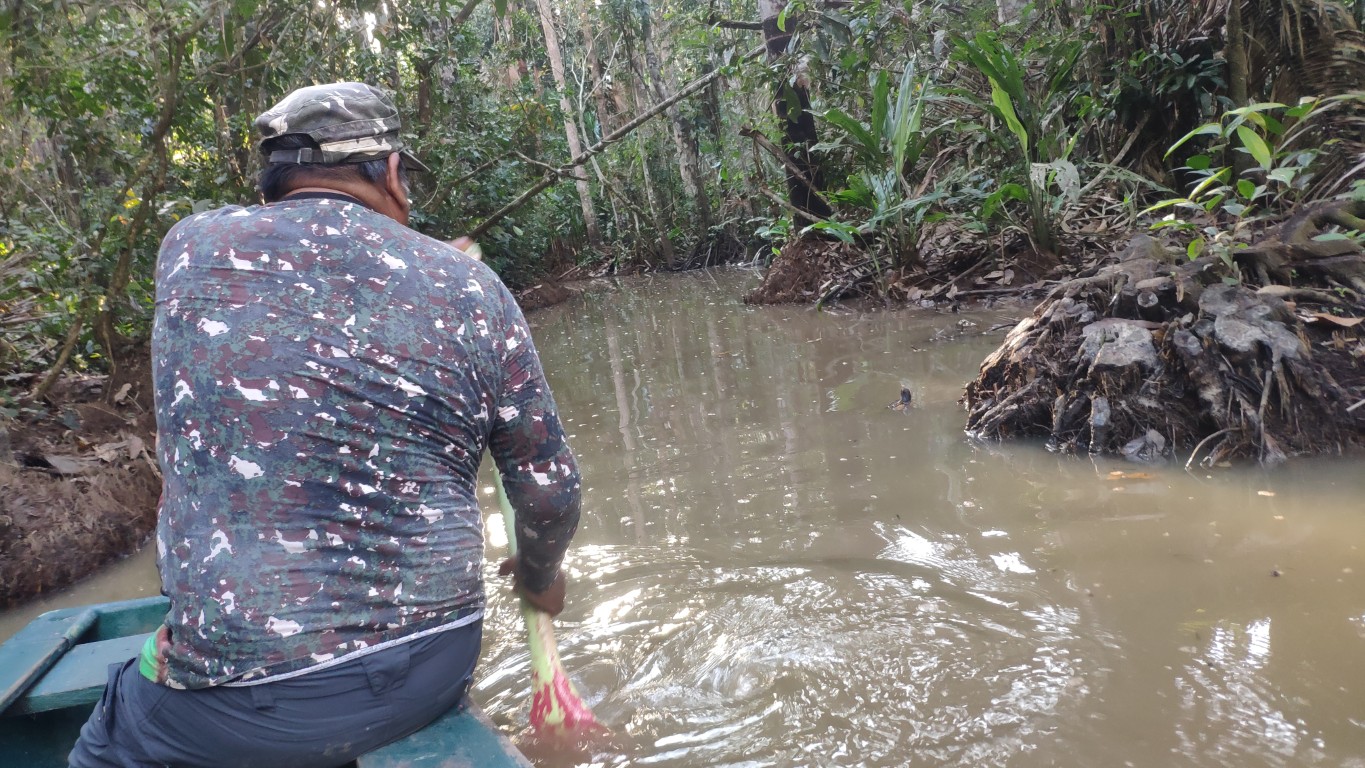
My Amazon visit was one three-day trip booked online. The operator collected the group in Puerto Maldonado and transferred us by road and boat to the lodge.
The river journey passes the forested banks beyond Puerto Maldonado. For lodges on the nearer river stretches, allow roughly 2–3 hours by road and boat; more remote lodges take longer, and the exact departure is tied to the group’s arrival.
My first afternoon included Monkey Island. After dark, the guide took us out looking for insects, frogs and tarantulas.
The next day was the full lodge day, navigating the river and smaller waterways looking for wildlife, then continuing on foot through the forest with the guide. Another night walk was part of the programme. River outings concentrate on the banks and branches; the walks bring you closer to roots, climbing plants, insects and the layers of the forest.
Other three-day itineraries visit Lake Sandoval. These programmes normally combine a boat transfer, a roughly 3 km forest walk each way and canoe time on the lake. Trips to a distant macaw clay lick use a different stretch of river and an earlier departure.
After the final lodge activity, we returned by boat and road to Puerto Maldonado.
A current three-day lodge package from Tambopata Wild starts at 301€ per person. The price varies with the lodge, room type and reserve visits.
This three-day Amazon jungle tour from Puerto Maldonado (affiliate link) is another option with lodge accommodation, guiding and boat transport. Meals, reserve admission and terminal transfers depend on the package.
I was a bit disappointed with the lack of activities, it wasn’t as filled as other tours, but perhaps it wasn’t that bad after all. Got some R&R and saw the Amazon. Puerto Maldonado is still one of the best place to experience it, and is very easy to access yet not that filled with tourists. Give it a try for the full Peru Experience.
For Puno, Transportes Reyna lists a 19:00 departure from its Puerto Maldonado boarding point, arriving around 08:00 the next morning. The journey takes 13:00, with tickets from 80 soles (20,50€).
Day 28: Amantani
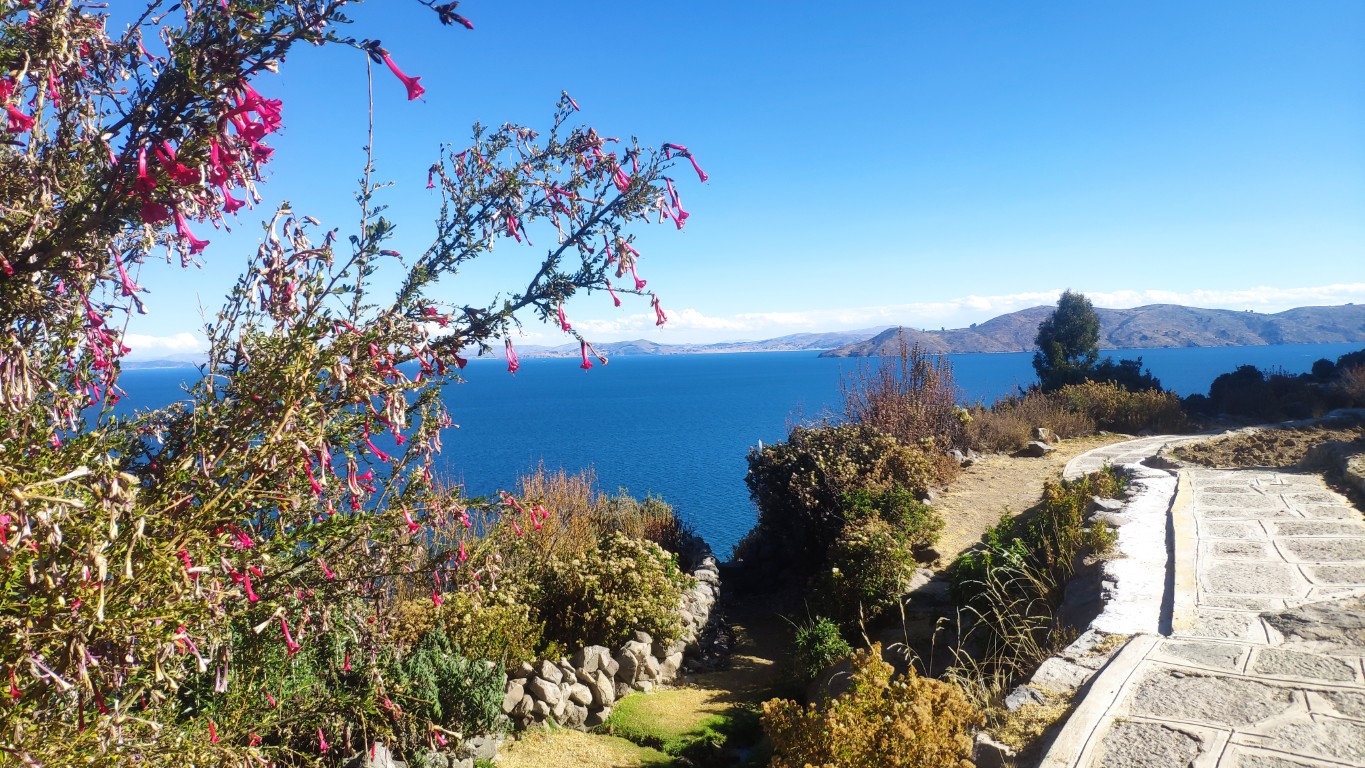
From Juliaca, my route continued across Lake Titicaca to Amantani. I had met a Peruvian family during the Amazon trip and they invited me to their home on the island. It became one of the best side trips of the journey.
It was a long route, full of different transports. Puerto Maldonado -> Juliaca then Bus station -> Port, Port -> Amantani
Then, an additional two hours of boat, relatively early in the morning. The boat left once full, like a colectivo. And hop, you’re on one of the prettiest island out there.
On the island, walk through the villages and agricultural terraces, then climb towards the Pachamama and Pachatata viewpoints. The paths connect the settlements with the two hilltops and ruins, with wide views across the lake towards the mountains. Allow 2–3 hours for a hill walk and return, depending on the village where you are staying. The island is around 3 800 m, with the summits above 4 000 m. Walking around the island offer route filled with flowers and views across the lake, like a sea in the middle of the mountains.
I stayed with the family I met in the jungle. I guess an independent stay can be arranged directly with a host, agreeing meals and transport together. A lot of families do host people! Tourism is a nice side income for a less travelled island like Amantani.
I ate with the family some traditional food, learned how to make adobe bricks, helped build a building and had an amazing time.
The next day I continued towards Copacabana for the Bolivia itinerary, meaning that was the end of my Peruvian trip. I did use some of the time for a short walk in Puno (Because I caught the 2:30h long boat to Puno, very early in the morning) 28 days felt too short, hence why I added the section after (just kidding, it’s in every articles).
But for a standalone trip, pushing it to 30 is worth it! Titicaca is worth at least one more day (I did it in Bolivia), and a additional day in Arequipa would be worth it.
More days?
Taquile and the Uros floating islands add one full day from Puno. On Taquile, walk up from the harbour through the agricultural terraces to the village, see the local textile work and stop for lunch overlooking the lake. Uros is a different landscape: islands built from layers of totora reeds, with reed houses and boats. Visits include an explanation of how the floating platforms are built and maintained.
This Uros and Taquile fast-boat tour (affiliate link) starts from 37€, including central Puno hotel pickup, boat transport, island entry, guiding and lunch. Its published programme starts at 07:00, includes about 1:00 of walking on Taquile, and returns to Puno in the afternoon.
For more hiking from Huaraz, the Santa Cruz trek adds four days through the Cordillera Blanca, crossing Punta Unión at about 4 750 m between high valleys and lakes. It is a camping trek, with departures and return transport arranged from Huaraz. The foreign-visitor Huascarán park ticket for 4–30 days costs 150 soles (38,50€), separate from the trekking package unless included.
Chachapoyas is a longer detour in the north. Allow at least three sightseeing days, plus travel: one for the stone walls and circular buildings of Kuélap, one for the forest walk to Gocta waterfall, and another for the cliffside sarcophagi of Karajía. This extension belongs around the northern part of the trip, before heading back through Lima.
Chiclayo and Lambayeque add two days north of Trujillo. Spend one at the Tumbas Reales de Sipán museum in Lambayeque, which displays the gold ornaments, jewellery and burial objects excavated from the Moche ruler’s tomb. Admission is 10 soles (2,60€); the museum opens Tuesday–Sunday, 09:00–17:00, at Avenida Juan Pablo Vizcardo y Guzmán 895. A second day can cover the adobe pyramids at Túcume, or Huaca Rajada–Sipán, where the tomb was found. Trujillo–Chiclayo buses take about 4:00, with fares advertised from 25 soles (6,40€) and ITTSABUS departures between 05:00 and 22:00 from its Trujillo terminal.
Cajamarca adds two or three days inland from Trujillo. The centre has the Cuarto del Rescate, associated with Atahualpa’s captivity, and a walk up Santa Apolonia for views over the city. Outside town, Cumbemayo combines a walk among tall volcanic rock formations with a pre-Inca aqueduct cut into the stone. This four-hour Cumbemayo tour (affiliate link) starts from 30€, with entry and pickup near the Plaza de Armas included; its published schedule is approximately 09:00–13:00. Another day allows time for the rock-cut burial niches at Ventanillas de Otuzco and the thermal baths at Baños del Inca. Buses from Trujillo to Cajamarca take roughly 7:00; Línea lists departures between 10:00 and 22:55.
Máncora and Punta Sal add two or three beach days farther north. Máncora has surf schools, beachfront restaurants and a long sandy beach; Las Pocitas, south of town, extends the coastal walks. Punta Sal, about 23 km north of Máncora, adds another broad sandy bay. The beaches have no admission charge. From Chiclayo, buses to Máncora take about 6:00, with advertised fares from 45 soles (11,50€). This extends the coastal route through Chiclayo towards Tumbes and the Ecuadorian border.

Comments?
comments powered by Disqus