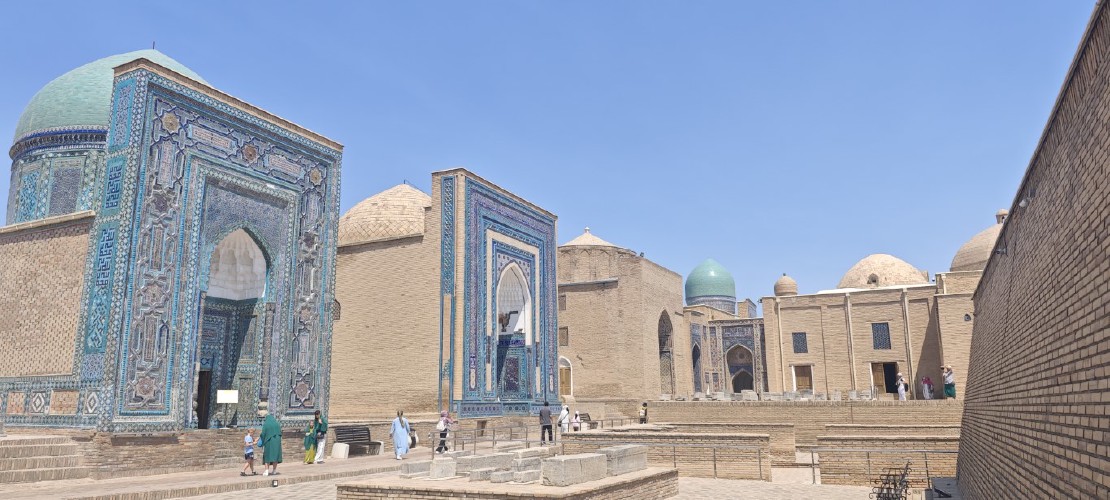
Affiliate disclosure: This article contains GetYourGuide affiliate links. If you book through one of them, I may earn a commission at no extra cost to you.
Kazakhstan → Kyrgyzstan → Tajikistan → Uzbekistan → Turkmenistan
Two months, five countries, deserts, mountains, and Silk Road legends.
My itinerary through Central Asia, from the Caspian Sea to the Gates of Hell.
Before diving into the itinerary, a few notes:
- Route: Kazakhstan → Kyrgyzstan → Tajikistan → Uzbekistan → Turkmenistan
- Budget: ~25–30 €/day (around 1,800€ total, excluding flights)
- Entry notes: E-visas are straightforward for several countries, while Turkmenistan requires an agency or letter of invitation depending on the case.
- Cash: Carry clean USD notes. ATMs and card payments are not reliable everywhere.
- Transport: Marshrutkas, trains, shared taxis, improvised night buses and a few domestic flights.
- Best season: Late spring to early autumn. The Pamir and other mountain areas become harder outside the main season.
Itinerary done quick
🇰🇿 Kazakhstan
| Day | Destination | Notes |
|---|---|---|
| Day 1 | Aktau | Arrival, coastal city |
| Day 2 | Torysh & Sherkala | Desert tour begins |
| Day 3 | Bozjyra Plateau | Long desert drive, isolated plateau |
| Day 4 | Tiramisu Canyon & Boktu | Unique geological formations |
| Day 5 | Arrival in Astana | Flight and central sights |
| Day 6 | Astana | Architecture, parks and mosques |
| Day 7 | Aqmola & Alzhir | Gulag memorial, then night train |
| Day 8 | Almaty City | City exploration, prep for hikes |
| Day 9 | Big Almaty Lake | Mountain hike |
| Day 10 | Charyn Canyon & Kolsai Lakes | Nature day |
| Day 11 | Shymbulak Mountains | High-altitude trek |
| Day 12 | Toward Bishkek | Border crossing & rest |
🇰🇬 KYRGYZSTAN
| Day | Destination | Notes |
|---|---|---|
| Day 13 | Bishkek | City exploration, museums, meeting friends |
| Day 14 | Ala-Archa National Park | Half-day mountain hike |
| Day 15 | Kyzart to Song-Kul | Transfer and first horse ride |
| Day 16 | Song-Kul | Full day on the plateau |
| Day 17 | Song-Kul to Karakol | Descent and long transfer |
| Day 18 | Karakol | City visit, rest |
| Day 19 | Jeti-Ögüz | Red rock cliffs, short hike |
| Day 20 | Altyn Arashan | Long alpine hike, yurt camp |
| Day 21 | Rest & Transport | Long route to Osh |
| Day 22 | Osh & Pamir Highway Start | Prep and departure for Pamir |
| Day 23 | Tulpar-Kul | Drive into the Alay Valley and yurt stay |
| Day 24 | Peak Lenin | Morning hike and Pamir Highway continuation |
🇹🇯 TAJIKISTAN
| Day | Destination | Notes |
|---|---|---|
| Day 25 | Karakul Lake | High-altitude desert lake |
| Day 26 | Murghab Plateau | Remote Pamir village |
| Day 27 | Langar & Wakhan Valley | Border views of Afghanistan |
| Day 28 | Yamchun Fortress | Hot springs + ruins |
| Day 29 | Kalaikhum | Scenic drive along Panj River |
| Day 30 | Dushanbe | End of the Pamir highway |
| Day 31 | Panjakent | Bazaar and archaeological ruins |
| Day 32 | Seven Lakes | Mountain lake excursion |
| Day 33 | Road to Khujand | Transfer and first city walk |
| Day 34 | Khujand | Fort, museum and parks |
🇺🇿 UZBEKISTAN
| Day | Destination | Notes |
|---|---|---|
| Day 35 | Arrival in Tashkent | Border crossing and Chorsu |
| Day 36 | Tashkent | Metro, museums and city centre |
| Day 37 | Tashkent to Samarkand | Gur-e Amir and Registan |
| Day 38 | Samarkand | Shah-i-Zinda and Afrosiyob |
| Day 39 | Bukhara old city | Poi-Kalyan and trading domes |
| Day 40 | Bukhara | Ark, backstreets and Lyabi-Hauz |
| Day 41 | Road to Khiva | Train west and first Ichan Kala walk |
| Day 42 | Khiva | Palaces, minarets and rooftops |
| Day 43 | Nukus | Savitsky Museum and regional capital |
| Day 44 | Muynak and the Aral Sea | Ship cemetery and former shoreline |
🇹🇲 TURKMENISTAN
| Day | Destination | Notes |
|---|---|---|
| Day 45 | Konye-Urgench | Border, ruins and Darvaza |
| Day 46 | Darvaza | Craters and road to Ashgabat |
| Day 47 | Ashgabat | Marble city and departure |
Kazakhstan
🇰🇿 Kazakhstan
Day 1 Aktau
Welcome to Aktau, a Kazakh seaside city where white cliffs meet the Caspian Sea and desalination plants. The sea breeze makes the promenade near the cliffs pleasant, and locals are out running, cycling, and fishing.
A striking Soviet influence is visible in large avenues, dilapidated buildings, and dust everywhere. Without oil, Aktau would not have grown into the city it is today.
The morning is ideal for exploring the coast. Take a walk along the Skalnaya Tropa Promenade, a 1.5km scenic path along the cliffs, perfect for morning photos. Spot the Melovoy Lighthouse, built atop a residential building, and visit city landmarks like the Ship Statue and the monument to Ukrainian writer Taras Shevchenko.
Aktau serves as the gateway to the Mangystau region. Use the afternoon to book a tour to Mangystau. I personally used RedMaya Travel. That direct link is not an affiliate link. They are my first recommendation. If they are unavailable, this three-day Mangystau jeep and camping tour is a GetYourGuide alternative (affiliate link). I did not take that specific tour. If you have more time in the city, do visit the mosque, the memorial and spot the countless soviet murals on the walls.
Day 2 Torysh & Sherkala
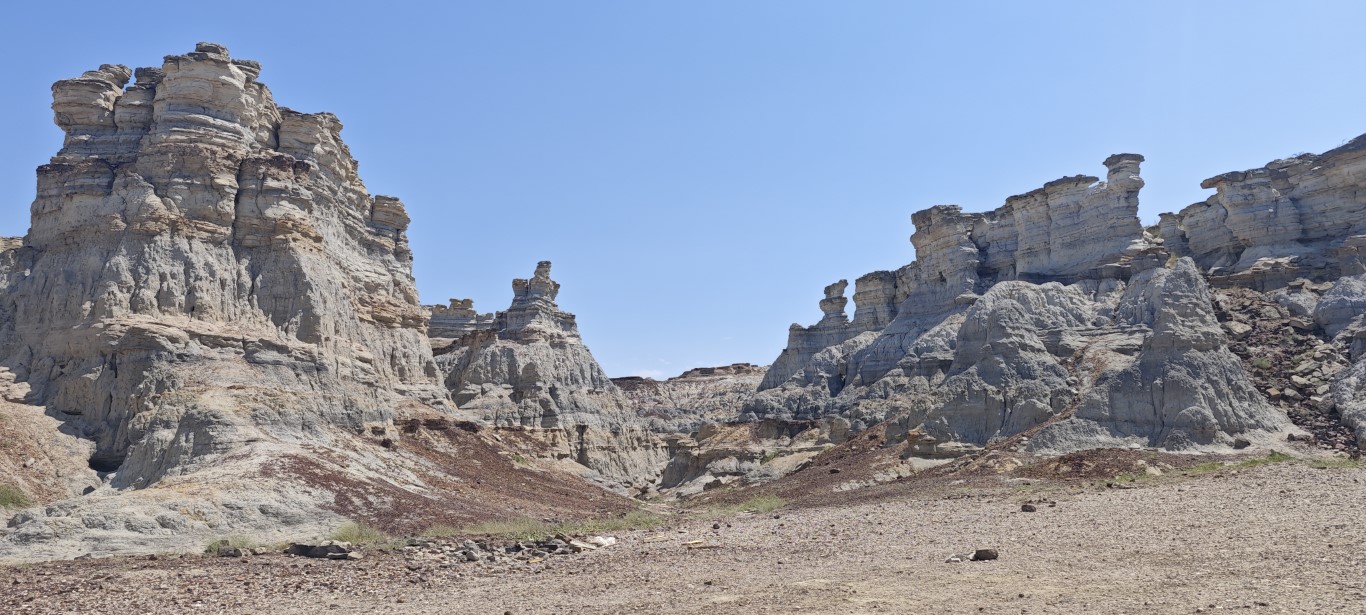
Early departure with a small group leads out of Aktau. The back city reveals former gulag-style apartments and silent oil wells. Beyond the industrial edge, the steppe suddenly bursts into life.
Camels, dromedaries, horses, and goats roam freely across the surprisingly green steppe. Summer rains have transformed the desert into fertile grazing land.
The first stop is Torysh – Valley of the Balls, filled with spherical rocks covered in marine fossils. Scientists remain puzzled by their origin. After a short break for lunch at a small roadside restaurant, the 4x4 drives further into the steppes.
Next, climb Kolkala, the Blue Mountain, for its colorful strata and quartz formations. Nearby is Sherkala – Tiger Mountain, a large isolated rock with hidden tunnels once used as a fort and lookout. The day ends at Airakty Shomanai, where rocky “castles” surround the camp. Sunset and sunrise here are breathtaking, under the stars of the Tengri sky.
Day 3 Bozjyra Plateau
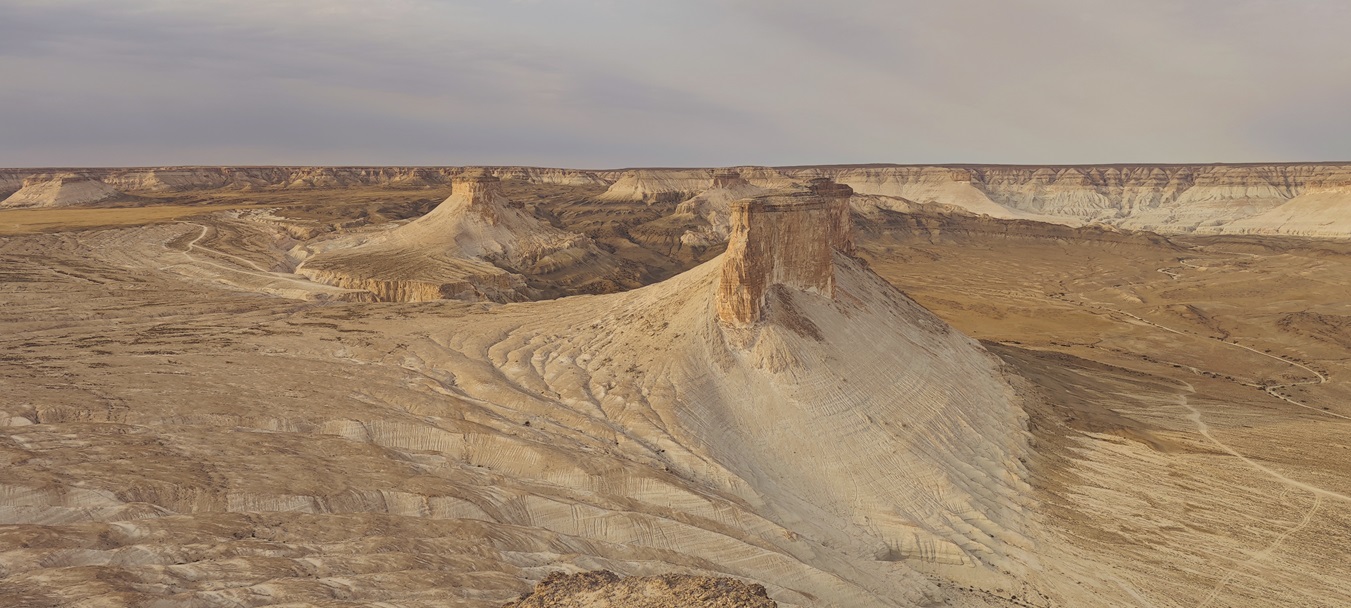
An early start involves packing tents and heading out for a long drive, passing desert villages and an oil town. The Ustyurt Plateau eventually opens into Bozjyra, a white, rocky plain with isolated cones, towers, and fang-like formations rising from the steppe.
Few animals are seen beyond marmots and traces of goats. Rain and wind later force a move to a more sheltered roadside camp.
This one was my favourite day of the trip, Bozjyra is truly grand.
Day 4 Tiramisu Canyon & Boktu
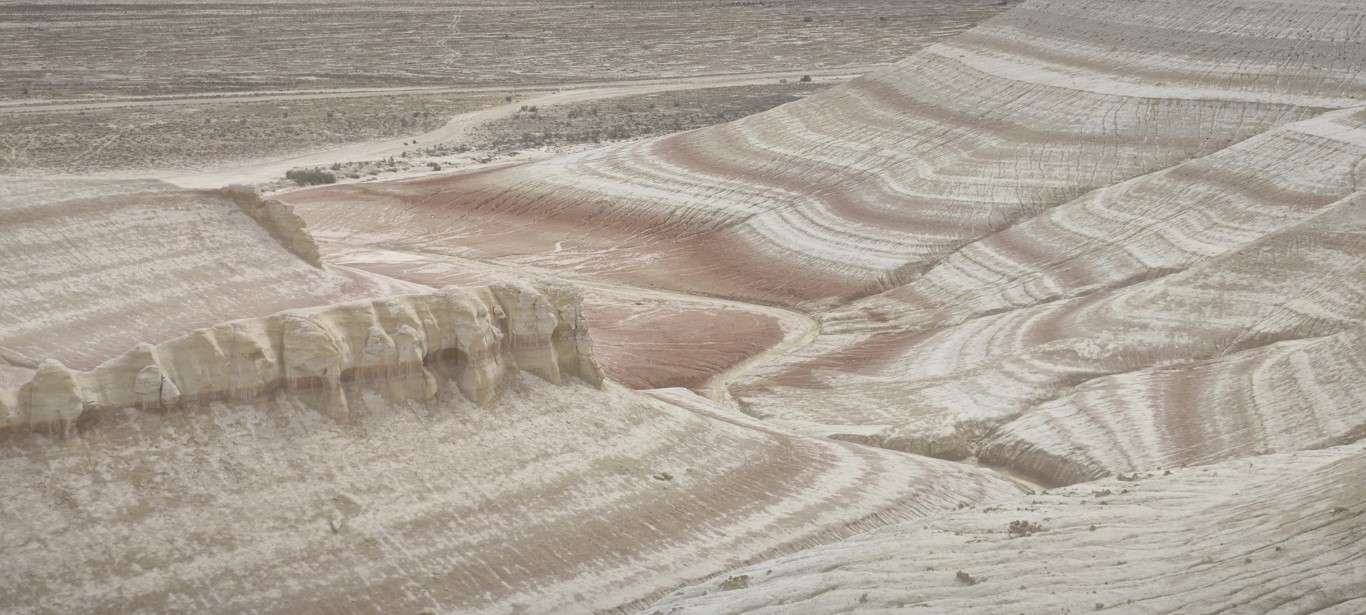
The morning brings clear skies and scorching heat. Visit Tiramisu Canyon, with creamy white walls cut by brown striations and abundant fossils. The canyon is unique and photogenic.
A detour to Boktu Mountain underlines the desert’s extreme heat. Optical illusions and mirages make the landscape seem otherworldly. Return to Aktau late in the day, exhausted and ready for showers.
Day 5 Arrival in Astana
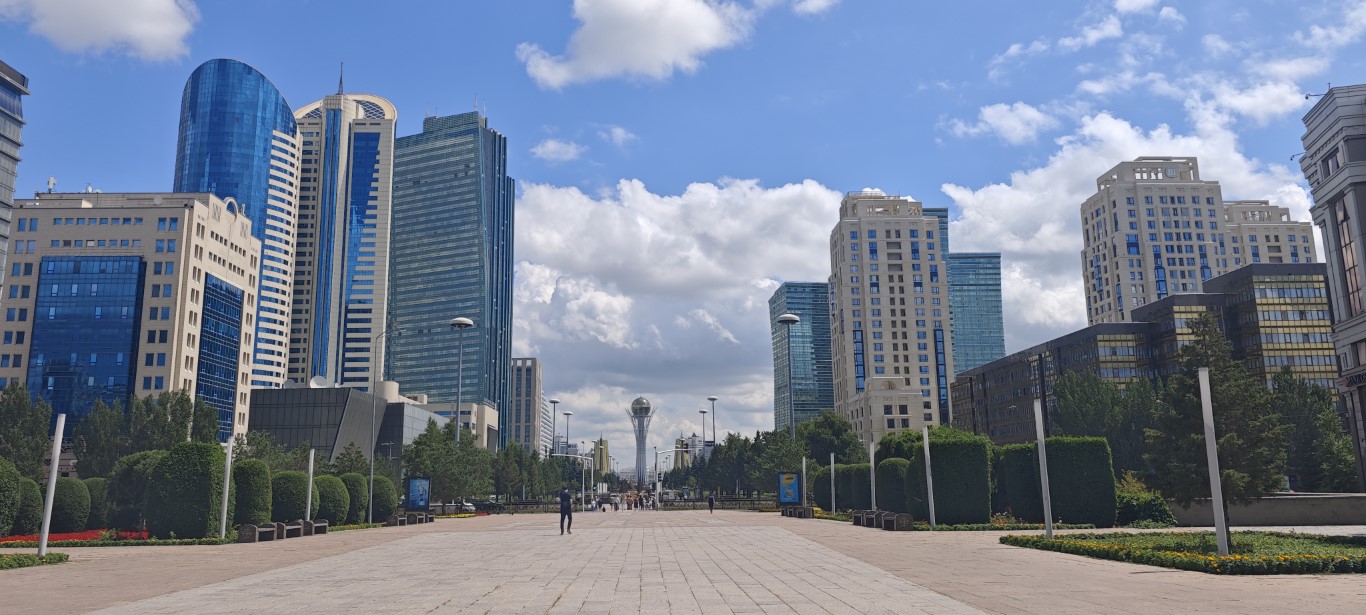
I took an early morning flight to Astana. The train would have been far too long (close to 24h!)
This city is modern, green, and beautifully planned, a stark contrast to Aktau. After checking in, use the remaining afternoon for the central axis around Baiterek, the riverfront and Khan Shatyr. The distances are longer than they look, so this is already enough after the flight.
Day 6 Astana
Use the second day for Hazrat Sultan Mosque, the Palace of Peace and Reconciliation, the parks and the new mosque at the edge of the city. It is the biggest mosque in Central Asia, but it was strangely devoid of believers when I visited.
Construction is ongoing for metro lines and other infrastructure, hopefully it will open soon.
The capital is sunny and open, requiring sunscreen and patience for long pedestrian detours. I was glad to have a second day: the monuments are far enough apart that rushing them would mean spending most of the visit in taxis.
Day 7 Aqmola & Alzhir
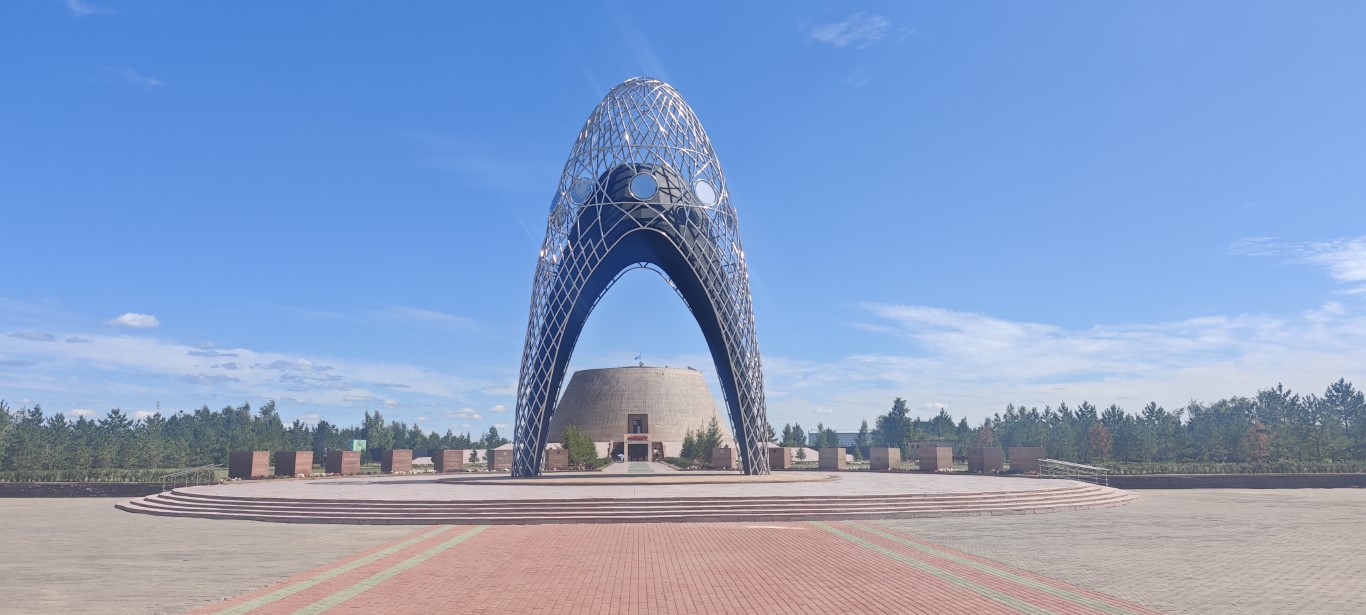
Morning trip north from Astana to Aqmola.
I used Yandex to find the needed bus and made my way to Aqmola, it took around one hour.
Visit Alzhir, the gulag for wives and children of political prisoners under Stalin. The memorial is striking but leaves a sense of absence; exhibits are sparse compared to expectations. Walking the grounds, the scale and solitude of the site make the oppression feel palpable.
Return to Astana in the afternoon and prepare for a night train to Almaty. Those trains are comfortable and the trip will ends in no time, even though it lasts 17 hours.
Day 8 Almaty City
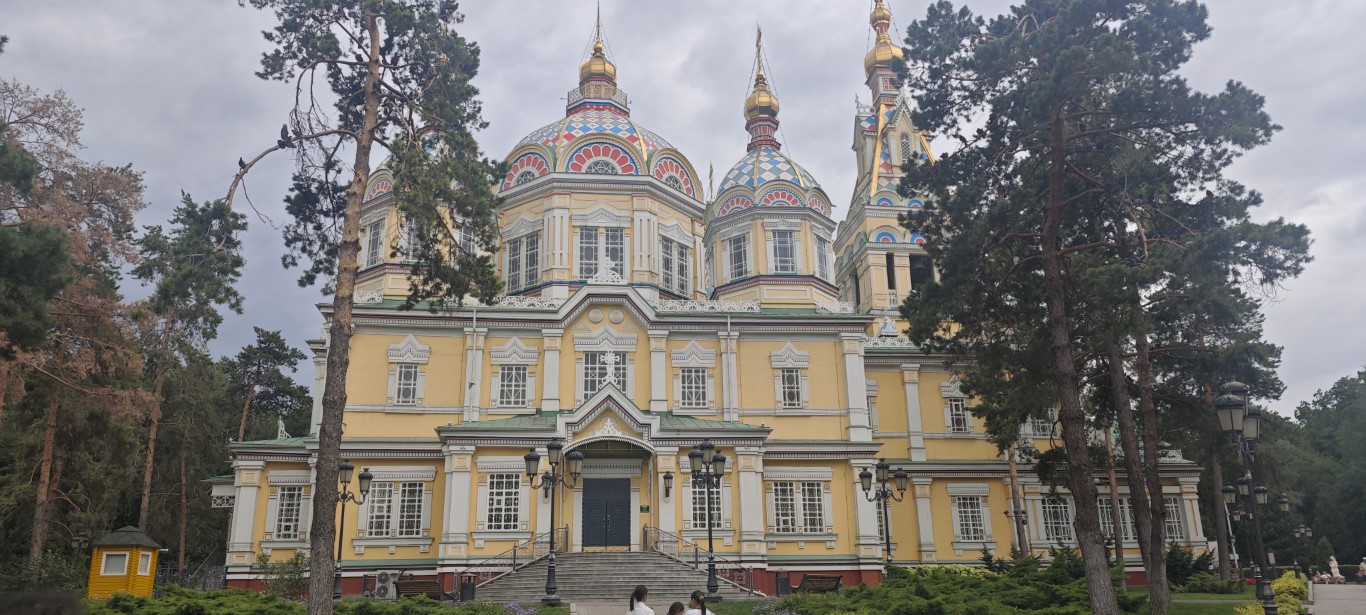
Arrival in Almatyn an historical city that did not preserve its history.
Visit the Green Bazaar for local foods and snacks, Panfilov Park and Zenkov Cathedral, a colorful wooden building, close to an older traditional building (the musical instrument museum, I believe). If you have time, take the cable car to Kok Tobe for city views. Museums like the Central State Museum offer historical context, but I haven’t been there, someone told me it was more or less the same than the one in Astana.
The city feels like Grenoble (The french chicago) without delinquency, with parks as calm oases amid Soviet urbanism.
IT’s a really nice city to spend some time in and to base yourself for hikes.
Day 9 Big Almaty Lake
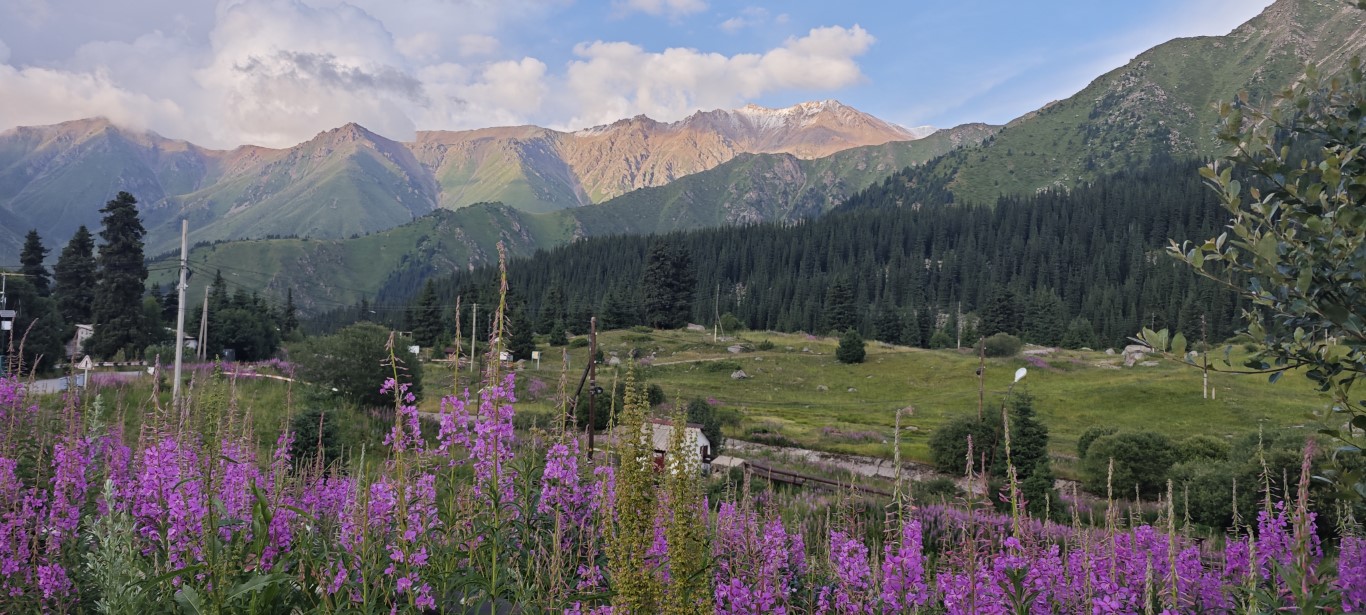
I went to hike to Big Almaty Lake with a friend, starting a bit late due to delays. he route follows a paved road, then water pipes requiring ropes. Military restrictions make the lake hard to access; it appears nearly empty, a contrast to iconic photos. So it was utterly disappointing.
I included it here because in the end it’s my itinerary, but, it’s much better to skip it and add one more day from the trip to Charyn and Kolsai.
Conversely, at sunset, the scenery is spectacular, at least and at last, a good thing.
Day 10 Canyons and Lakes
Book one of the numerous tour to get out of the city, especially one for Kolsai, Kaindy and the charyn canyon.
This two-day Charyn Canyon, Kolsai and Kaindy Lakes tour (affiliate link) gives the route the time I wish my one-day trip had. I did not use this operator.
Two days is better than one, I did it in one, it wasn’t great. Everything was rushed and my group was super slow.
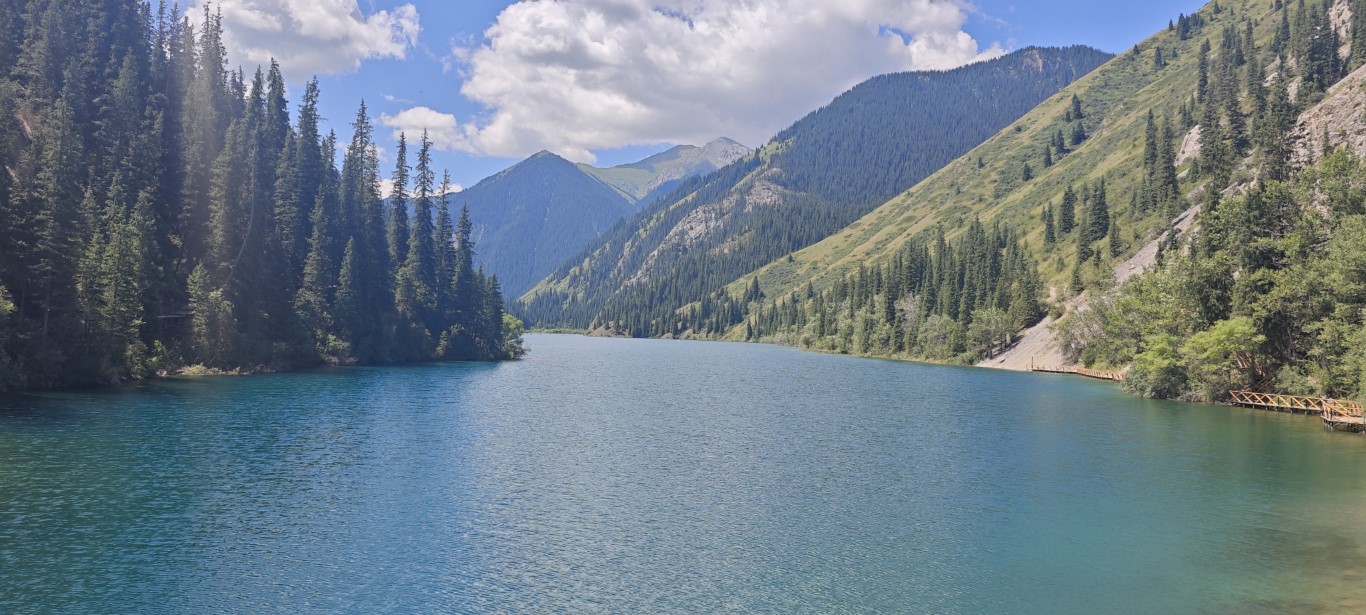
The first step is Lake Kolsai, a beautiful lake born from an earthquake, amidst a pine forest.
Next is Lake Kaindy, where a flooded forest presents a surreal scene. Dead tree trunks rise vertically from the water, preserved after a historical landslide. Walking along the shore allows full appreciation of its haunting beauty.
Finally, explore Charyn Canyon (Valley of Castles). Dramatic red cliffs, jagged formations, and visible wildlife make this a mesmerizing landscape.
Day 11 Shymbulak Ski resort
A ski resort?? Yu^p, it’s also a place to hike.
Hike above 3000 meters in the Tian Shan, near the Shymbulak ski resort.
The 1000-meter climb passes green alpine meadows to glaciers and snow. The hike is rocky, slippery, and slow, though a cable car from the base helps. Scenery is breathtaking, and locals are friendly, offering water and support along the route. Descent is tiring and even more slippery.
I’d recommend the cable car on the way down, but be careful, it gets crowded. And it’s stupidly expensive too.
Day 12 Toward Bishkek
From the Almaty central bus station, take one of the numerous bus to Bishkek. They leave every two hours or something similar.
The bus ride covers 200 km in ~5 hours due to the border crossing.
Evening is reserved for rest and recovery.
For travelers heading further to Karakol, buses run via Bishkek and around Lake Issyk Kul, a long but scenic route.
Kyrgyzstan
Day 13 Bishkek
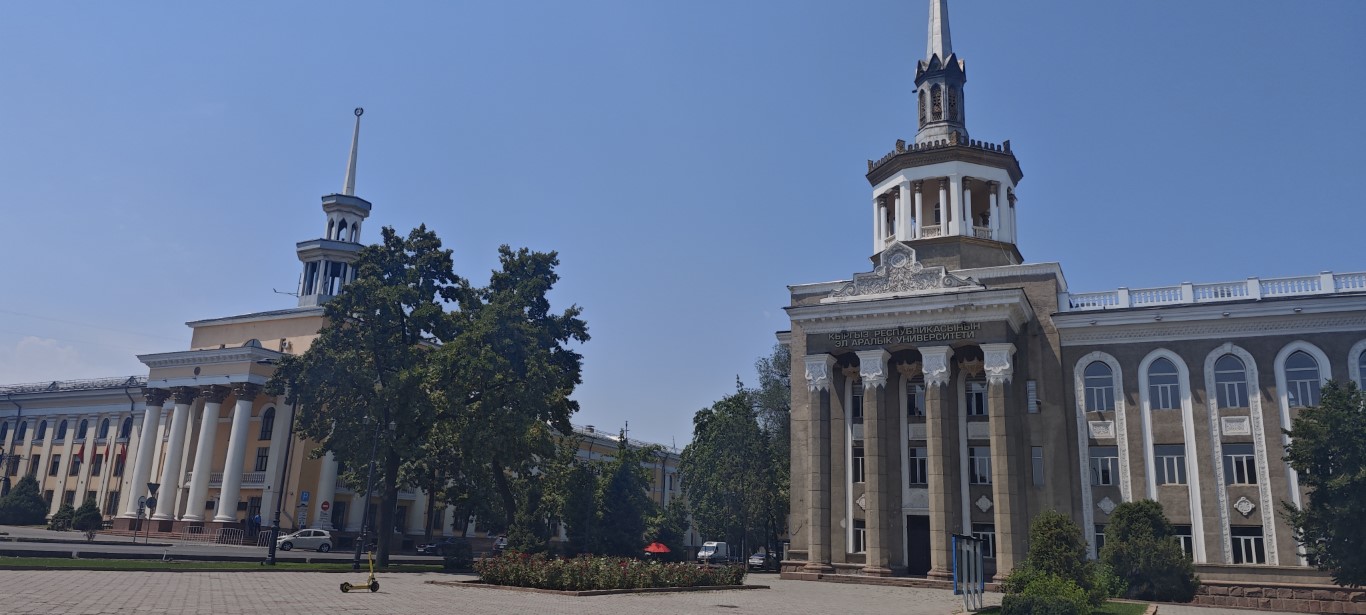
A simple day: Do a walk in the tiny city center, still under construction in parts.
Bishkek is flat, wide, and rather uninspiring. Tourists mostly come for the State History Museum, excellent for Soviet and nomadic history, and the new mosque, a Turkish-built replica inspired by Hagia Sophia.
The hostel I went in Apple Hostel Bishkek, in contrast to the city, was alive with travelers: young hikers, solo backpackers, and small groups exchanging stories and planning routes. The evening was spent chatting, meeting new people, and swapping travel tips.
Day 14 Ala-Archa National Park
Early morning departure to Ala-Archa National Park, just south of Bishkek.
A half-day hike follows trails through pine forests and steep valleys. Streams and small waterfalls punctuate the path, while jagged peaks rise suddenly from the valley floor.
Ala-Archa is perfect for a mountain experience: accessible, yet offering a sense of remoteness. Trails are well-marked, but slippery rocks and mountain streams require attention. It’s easy to reach, there is a bus going straight to the trailhead, I found it on Yandex. Most hostels know the bus and where to take it.
Day 15 Kyzart to Song-Kul
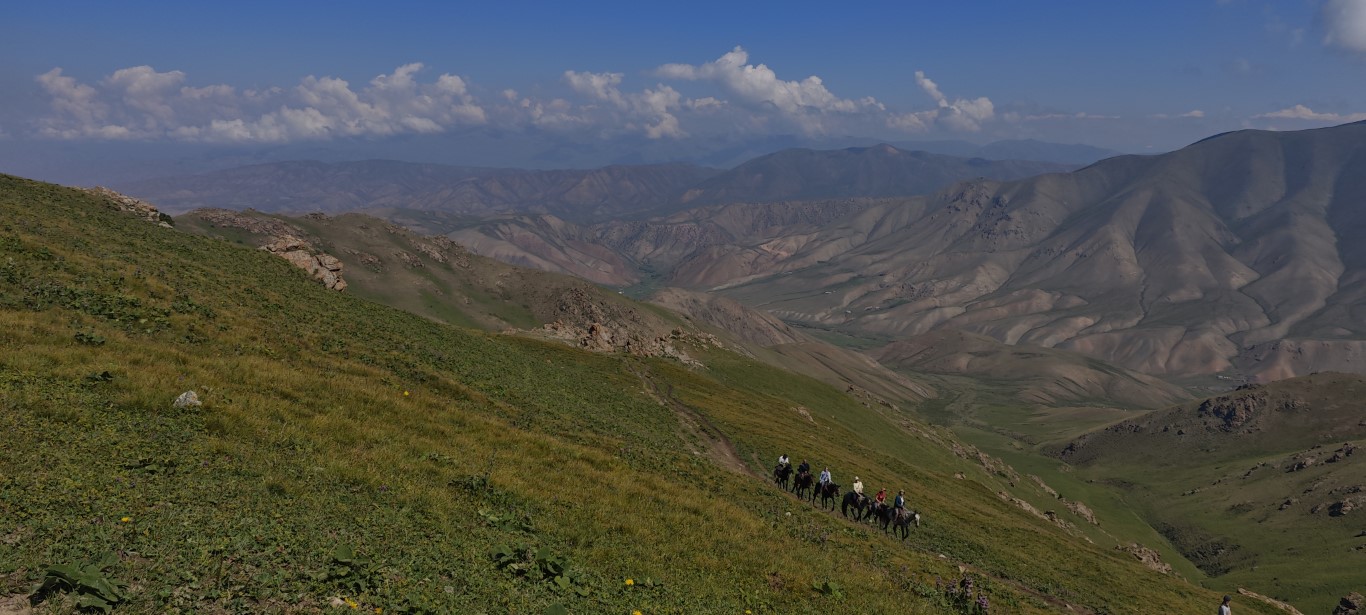
Departure early morning from Bishkek, traversing valleys and mountain passes to reach Kyzart village. After lunch, each traveler receives a horse, with bags attached. The horses are independent and guide the ride across valleys, rivers, and ridges, experiencing drastic temperature drops from 30°C to 10°C.
The first night is spent in a shared yurt after the climb towards the plateau. Temperatures fall quickly once the sun disappears, so the riding day and the overnight stop should be treated as one complete stage.
Day 16 Song-Kul
The full day on the plateau alternates between open plains, lakeside sections and steeper ground around the surrounding ridges. Without the transfer from Bishkek or the onward journey to Karakol, there is time for a longer ride, stops near the lake and a second night in a yurt.
Horses move through herds of horses and cattle across the open steppe. Weather can change quickly even in summer, with a large temperature difference between the afternoon and evening.
Day 17 Song-Kul to Karakol
On the final day, descend towards a lush village valley, with Song-Kul fading behind. An afternoon transfer with six other travellers headed towards Karakol, saving time despite the long journey. Arrival was late in the evening.
It was my first multi days hike on a horse, it was truly something. I hate horses, but someone roped me into going, so I spent three days on a fart machine that did whatever he wanted.
My ride crossed from Kyzart to Song-Kul, and I booked it separately. The closest bookable alternative I found is this three-day Song-Kul trip with a yurt stay and horse riding (affiliate link). It is not the same route and includes only a shorter horse ride, so do not book it expecting my exact three-day trek. Great!
Day 18 Karakol
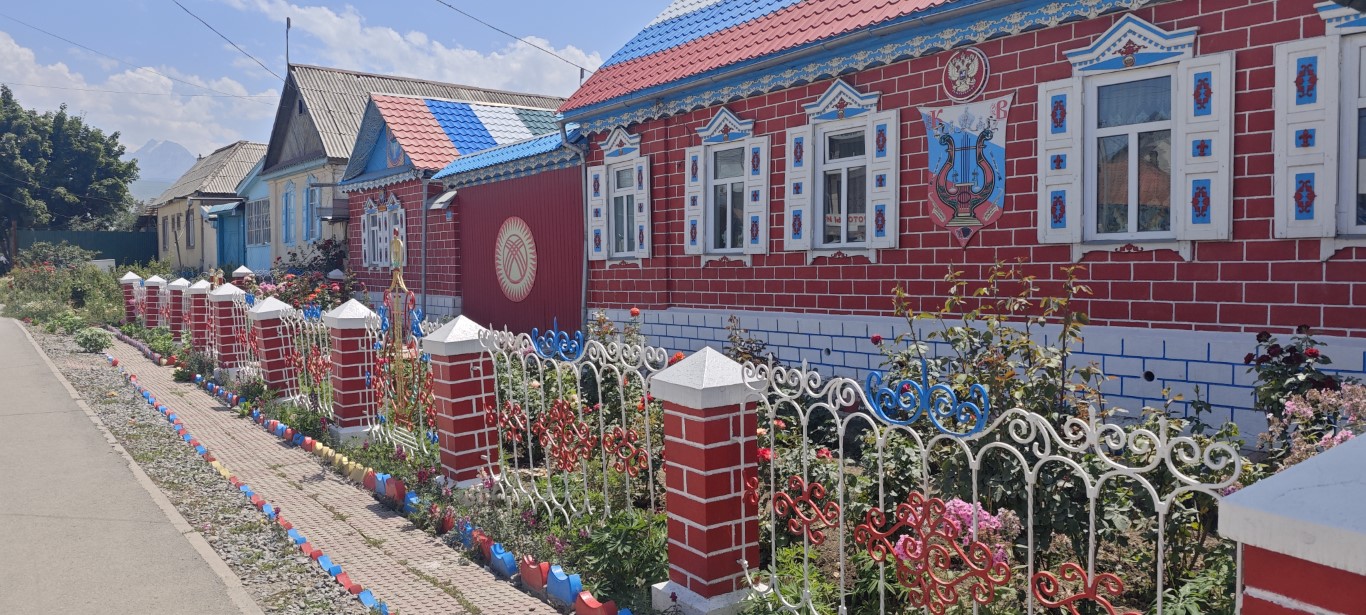
Karakol sits between Lake Issyk-Kul and the Tien Shan mountains, population around 100,000, swelling in summer with tourists.
Stroll the lively streets, cafés full of Russian and European visitors, and nearby small beaches on the lake. Local architecture is diverse: Russian-style “gingerbread” houses, a Tatar mosque, a Dungan mosque, and Dungan-Chinese restaurants. The bazaar is built from shipping containers.
I went there straight after Song-Kul, using a shared taxi from Kyzart, it took around 7 hours due to road constructions.
it’s the most beautiful city of Kyrgyzstan, probably because it’s a russian/dungan city. I really appreciated the abundance of Dungan food.
Day 19 Jeti-Ögüz
Morning visit to the famous Sunday animal market, the largest in Central Asia. Livestock includes cows, horses, and sheep.
(Do it when it’s a sunday, if it’s not, spend more time around Jeti Ogyuz, there are nice hikes in the area)
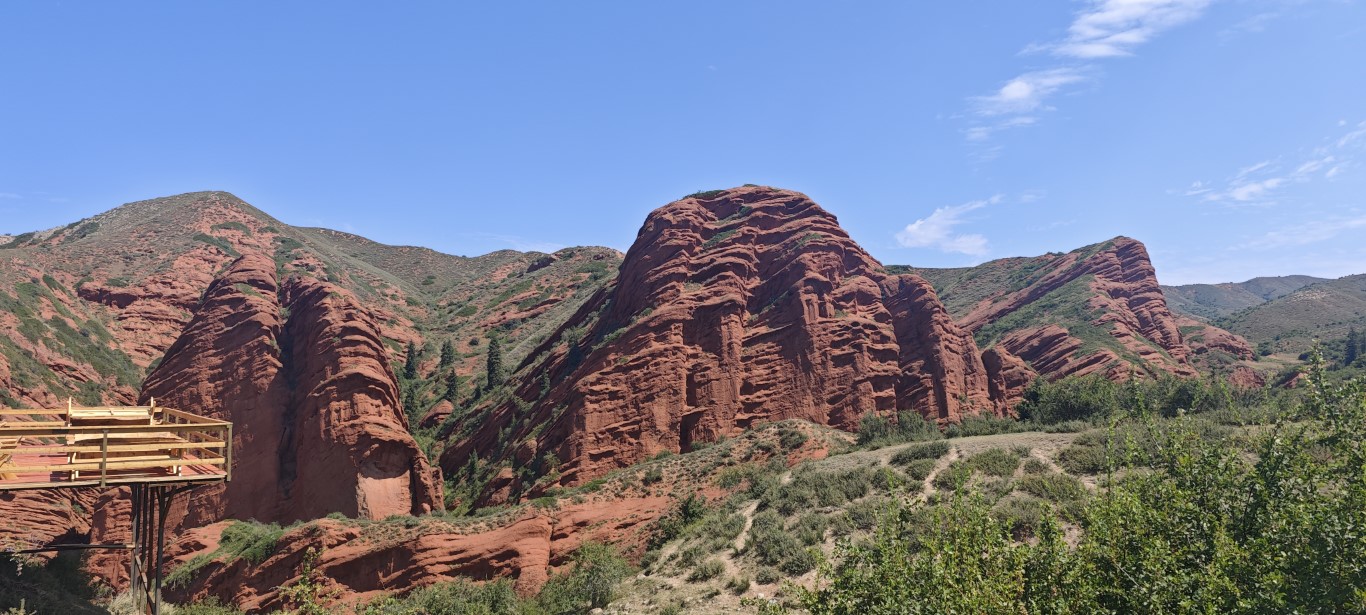
Mid-morning minibus takes the group to Jeti-Ögüz, with a shared taxi for the final stretch (~1.50€). The hike features red rock cliffs and alpine valleys. The trail to the viewpoint is less exciting, but scenery remains beautiful.
Ask for Jeti Oguz Kurort (Resort), only a handful of buses go there, and not year round, seemingly not everyday either.
Return to Karakol involves hitchhiking due to missing minibus service. Arrival around 17:00.
Day 20 Altyn Arashan
Early departure via minibus from Karakol bazaar to trailhead. The first hour is muddy and under construction, with essential old water pipelines visible.
Begin an 8-hour alpine hike with a companion. Dense pine forests, gray river valleys, and horses grazing accompany the path. Russian jeeps ferry non-hikers (~20€ each). Arrival at the yurt camp occurs in rain, with the valley more touristy than online photos suggest. The return hike can be done by hitching after the last minibus. A long, wet, and tiring day. But so worth it!! When you look up pictures of Kyrgyzstan online, you’ll often see the Altyn Arashan valley. Now it’s crowded with camps, yurts, tourists and booming infrastructure, but you can still find nice spots, especially going further.
If you’re lazy, you can use a car to go up or down. They ask for 40€ or something similar.
Day 21 Trip to Osh
Transport day covers ~400 km to Osh, split into a 6-hour minibus and 12-hour overnight cargo bus through mountains. Summer heat and constant horn honking make it exhausting. Arrival is the next morning.
- Important notes
There is no real night bus to Osh. At least not in 2025. Go to the market and find a Cargo Bus
It’s at the “Kerben section” of the Dordoi market says people online. I haven’t found this Kerben thing, but I went where cargo bus were loaded and found one leaving to Osh, I was allowed to seat behind the drivers. The whole night was seated with a family of four across a single row. Ouch. It was around 20€ for the privilege.
Day 22 Osh & Pamir Highway Start
Osh, the second city of Kyrgyzstan, is more Uzbek in character but surprisingly modern. Streets feature bubble tea, ice cream, pizza, and bars. Sacred mountain is unimpressive; the city is partially under reconstruction.
Don’t waste time there it’s essentially just a starting point to the Pamir Highway or to Peak Lenin.
Prepare for the Pamir Highway, a 7-day jeep journey through Gorno-Badakhshan toward Dushanbe. Afternoon briefing, then departure through arid mountains separating Fergana Valley from Alay Valley.
I took a seven-day one-way trip from Osh to Dushanbe. For a bookable alternative, this ten-day, nine-night Pamir Highway tour from Dushanbe (affiliate link) covers both the southern and northern corridors. It is a round trip rather than the one-way route I took, and I did not use that company, so compare the included accommodation and GBAO permit handling carefully.
Day 23 Tulpar-Kul
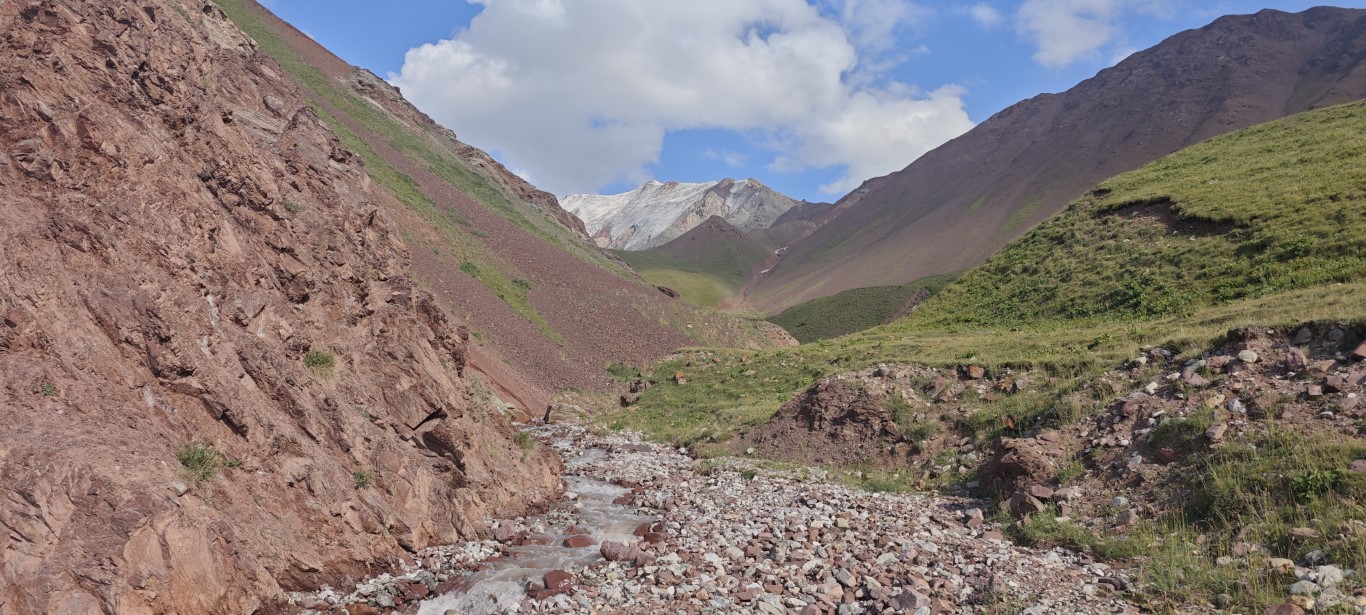
Journey climbs to 3,500 meters, passing villages and rivers with red mountains in view.
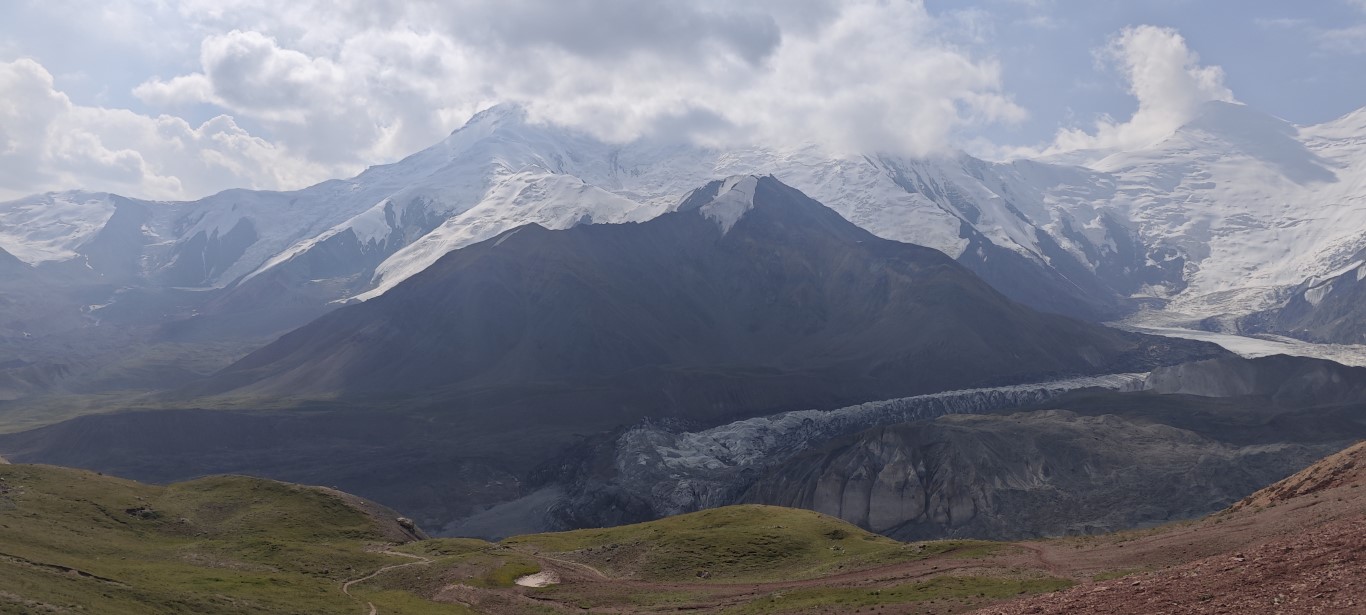
Stop at Lake Tulpar-Kul, overnight in yurts. Peak Lenin viewpoints reveal snow-capped peaks (~7,000m) and glaciers.
After the drive from Osh, keep the first walk short. The altitude is a substantial jump from the Fergana Valley, and the yurt camp is the base for the following morning rather than a quick photo stop.
Day 24 Peak Lenin
With my group we spent the morning there, did a small hike and enjoyed the red and green mountains as well as the multi colored lakes. Honestly, one of Kyrgyzstan’s prettiest area.
After the hike, continue towards the Tajik border and the high Pamir route. Keeping this as its own day leaves time for the border formalities and avoids counting the evening arrival at Tulpar-Kul as a full visit.
Tajikistan
Day 25 Karakul Lake
After a morning drive from Peak Lenin, we reached the border then went on to Karakul Lake, altitude ~3,600 meters.
The lake sits in a high-altitude desert, surrounded by jagged peaks and minimal vegetation. The water is clear blue and mirrors the mountains, creating a dramatic backdrop. Small local encampments are scattered along the shore. The wind can be strong, and temperatures drop rapidly in the late afternoon.
Evening spent at the motel from THe Shining near the lake. It’s cold and bare-bones. Just like the landscape. Welcome to Tajikistan.
Day 26 Murghab Plateau
A long day of driving, about 6.5 hours over rough roads.
The route passes through abandoned villages and vast desert scenery before reaching Murghab, the main hub. Murghab is a container town, poor but trading with China, with a small, somber market. Beyond Murghab, the road quality deteriorates further, dominated by trucks.
We stopped at a small, crystal-clear pond teeming with fish, and continued to Alichur, a village of ~800 inhabitants split between Kyrgyz and Pamiri communities. Locals invited us into an impromptu football game, and we tasted yak milk ice cream and enjoyed a yak steak dinner. The night sky was breathtakingly clear, filled with stars.
Day 27 Langar & Wakhan Valley
Departed Alichur toward Langar, near the Afghan border.
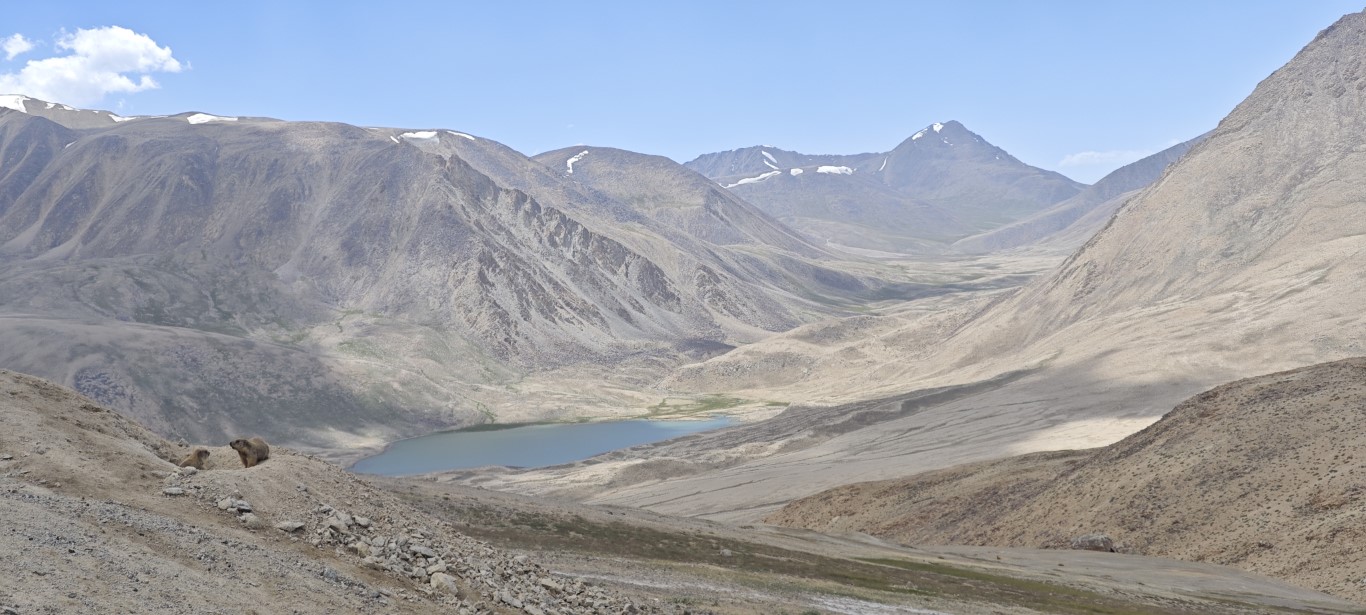
Midway, we stopped at a high-altitude lake for photos, then hiked about three hours, reaching up to 4,800 meters. Marmots and wildflowers dotted the landscape, and the views across the Panj River into Afghanistan were spectacular. Descending to 3,000 meters, greenery and trees returned. Langar village is forested, with a guesthouse offering hot water and electricity—a rare luxury in this remote area. It’s a nice spot to rest and to explore the local culture.
Day 28 Yamchun Fortress
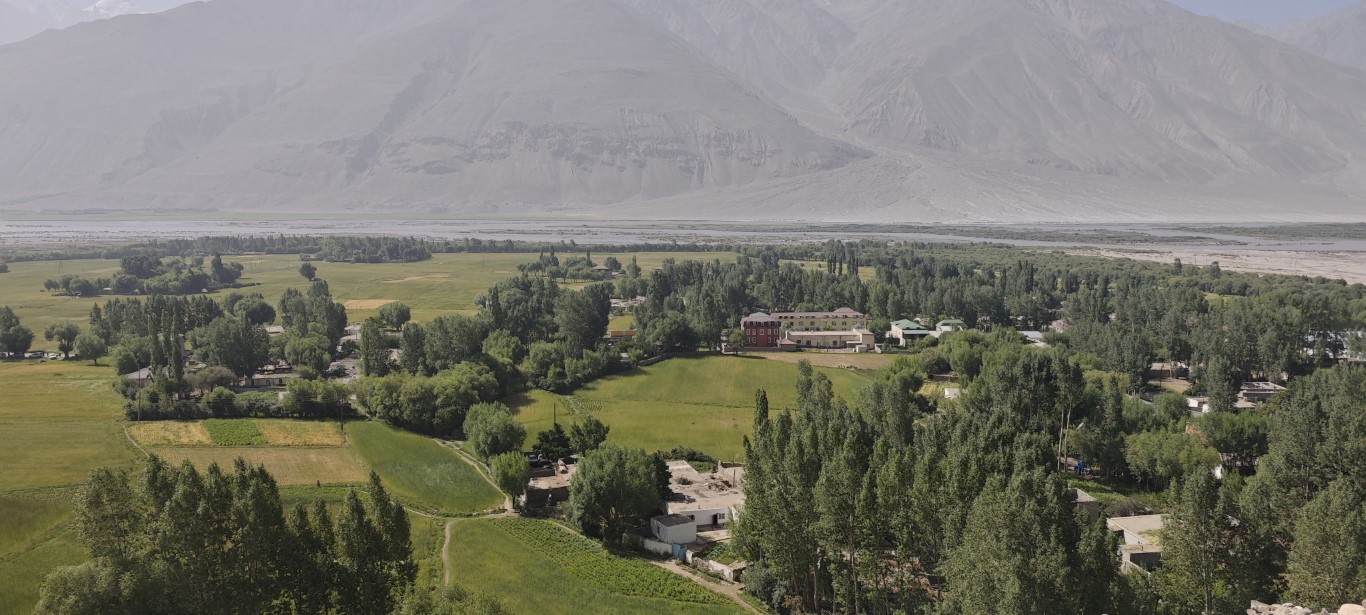
Morning drive to Khorog, with a stop at Yamchun Fortress, XII-century ruins perched above the valley. The fortress once guarded historic Afghan trade routes and offers panoramic views.
We visited Bibi Fatima hot springs, mingling with locals in the warm waters (naked lol).
A light hike along the Panj River provided glimpses of both Afghan and Tajik villages. Arrival in Khorog, Gorno-Badakhshan’s capital (~38,000 inhabitants), was quiet and pleasant, though attractions are limited. The vibe there was bad. A member of another group got attacked by a guy with a rock, ended up going to the hospital. My group was followed by a weirdo named Hugo, trying his best to take the girls with him. He followed us everywhere and was always close by, preying.
Day 29 Kalaikhum
Six hours of driving along scenic but under-construction roads.
The Panj River provided the most striking views, with occasional stops in tiny villages. Kalaikhum itself is a minimal settlement, offering a chance to observe the Afghan border and wash clothes. The only thing worthwhile to do is resting and watching the afghans from afar. A bit boring.
Day 30 Dushanbe
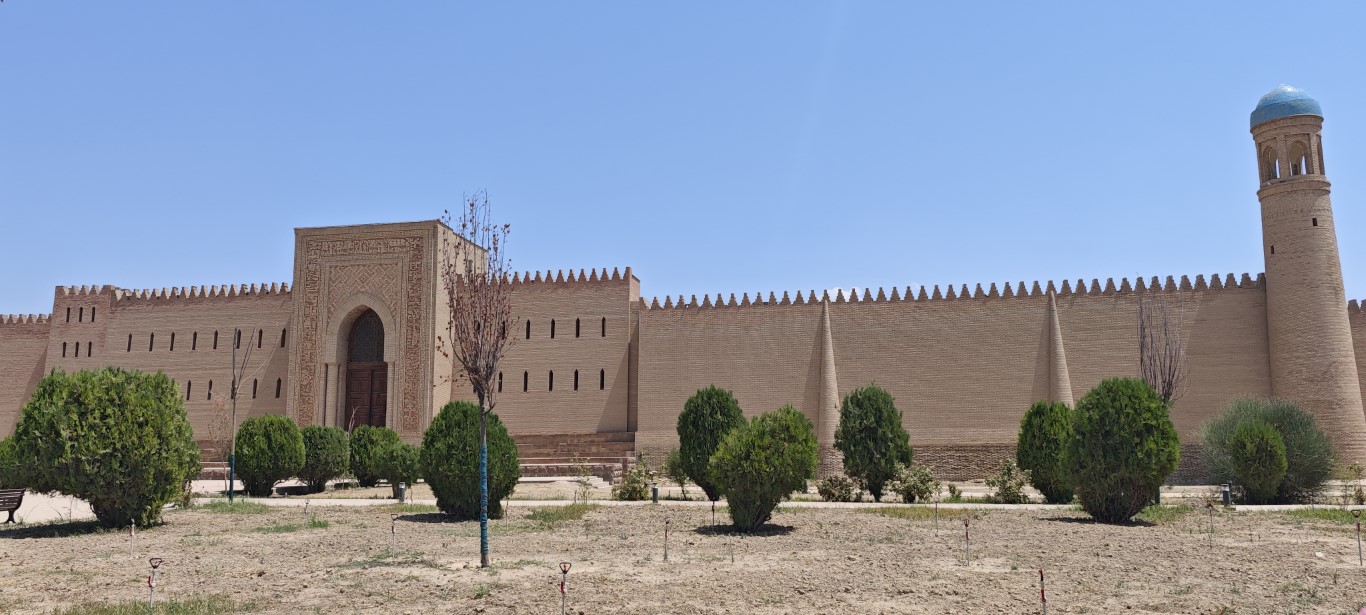
The final leg of the Pamir Highway brought us to Dushanbe. The drivers pushed hard, stopping briefly at the Afghanistan viewpoint and Hulbuk Fortress (XII century, with a small museum). A short visit to Nurek Reservoir, with its clear waters and island, completed the leg. Arrival in Dushanbe at 16:00 was a relief; internet access and city comforts felt luxurious.
In the end, the best part of the trip was the people I have been with.
Otherwise, the landscapes are a bit boring for the most part, the vibe is usually weird,
the company scammed me a few bucks and robbed me of two days, plus were unable to answer queries…
It’s not a must do, just like Vietnam’s Ha Giang loop, it’s overblown and overrated;
Perhaps it’s better on a motorbike, like many do. I guess it’s part of the appeal.
Day 31 Panjakent
Morning transfer to Panjakent, near Uzbek border.
- Explore the local bazaar and taste regional cuisine.
- See the sunset over the archaeological ruins of old Panjakent.
The transfer and the town fill the first day without adding a mountain excursion. Panjakent also works as a practical base because the Seven Lakes road branches south from this part of the country.
Day 32 Seven Lakes
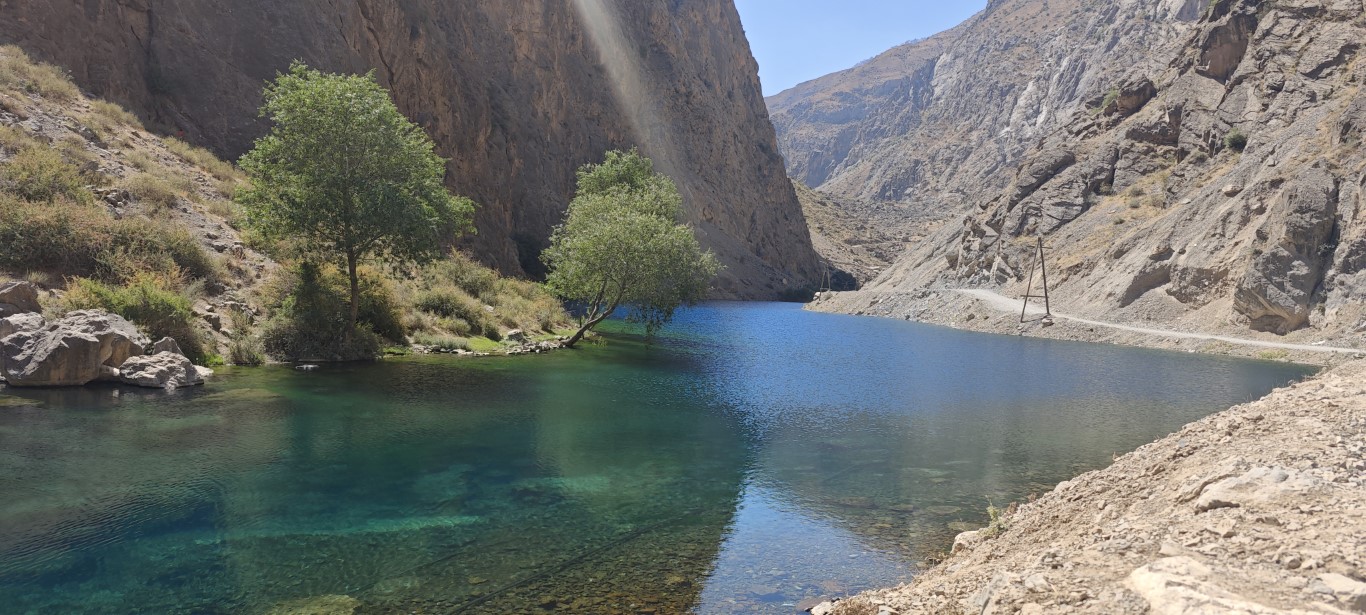
Use a full day for the Seven Lakes area. The lakes sit along a mountain valley reached by a slow road, and the upper section takes time even with a driver. A day trip allows several stops and a short walk instead of turning the valley into a detour during the transfer to Khujand.
It’s great if you transfer to Uzbekistan from there. I mostly followed other people here before heading to Khujand.
If you desire to skip it, use that time to get one more day in Dushanbe, and perhaps one more day for the Fergana valley or something.
Day 33 Road to Khujand
Shared taxi from Panjakent (~4 hours) to Khujand, the second-largest city in Tajikistan.
After arriving, use the rest of the day for a first walk through the centre, the riverfront and the city parks. The four-hour estimate does not include waiting for a shared taxi to fill or breaks on the road.
Day 34 Khujand
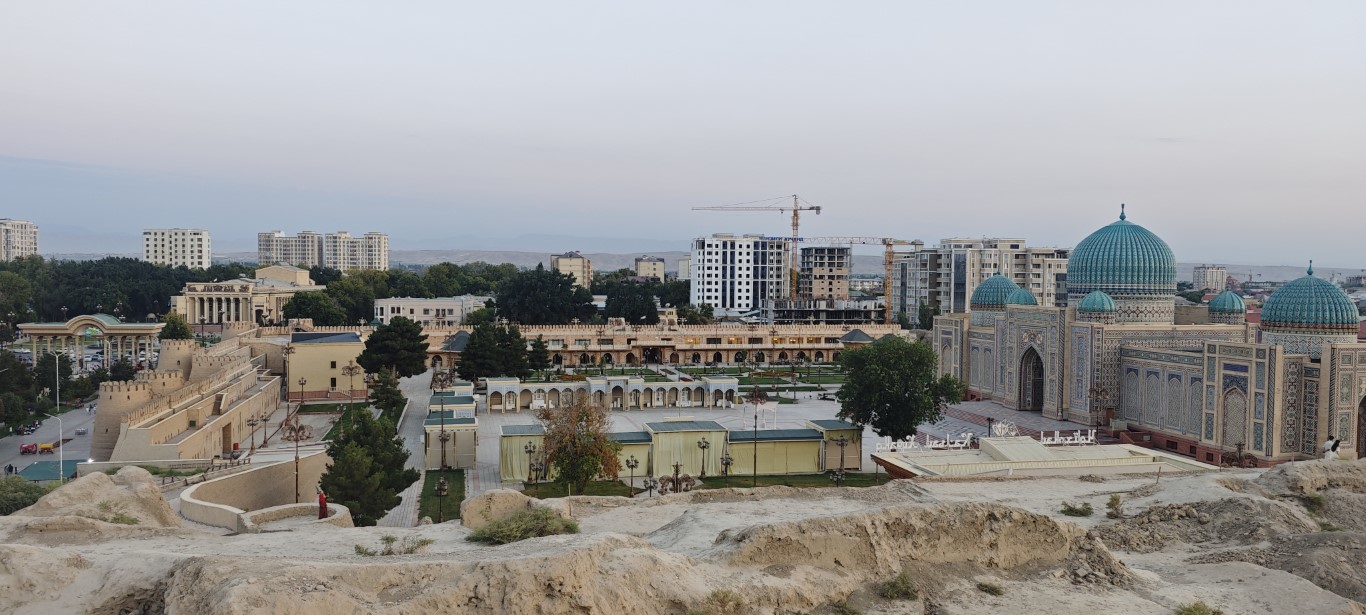
Khujand is historic, with ancient ruins, a reconstructed fort, small museum, and mausoleum. City parks, the 24-meter Stalin statue, and modern interpretations of architecture provide points of interest.
Khujand contrasts sharply with the remote Pamir villages and alpine landscapes, marking the end of the Tajikistan leg of the journey.
The city is worth it for its big museum
(close to the boring Sugd historical museum, from the entrance, go left until you find the small gate heading inside)
You’ll find a fake village, a building similar to the one in Uzbekistan, with hilarious paintings of the great leader inside as well
as a hill overlooking the city, (site of cities built by Alexander and Cyrus the greats)
Uzbekistan
Day 35 Arrival in Tashkent
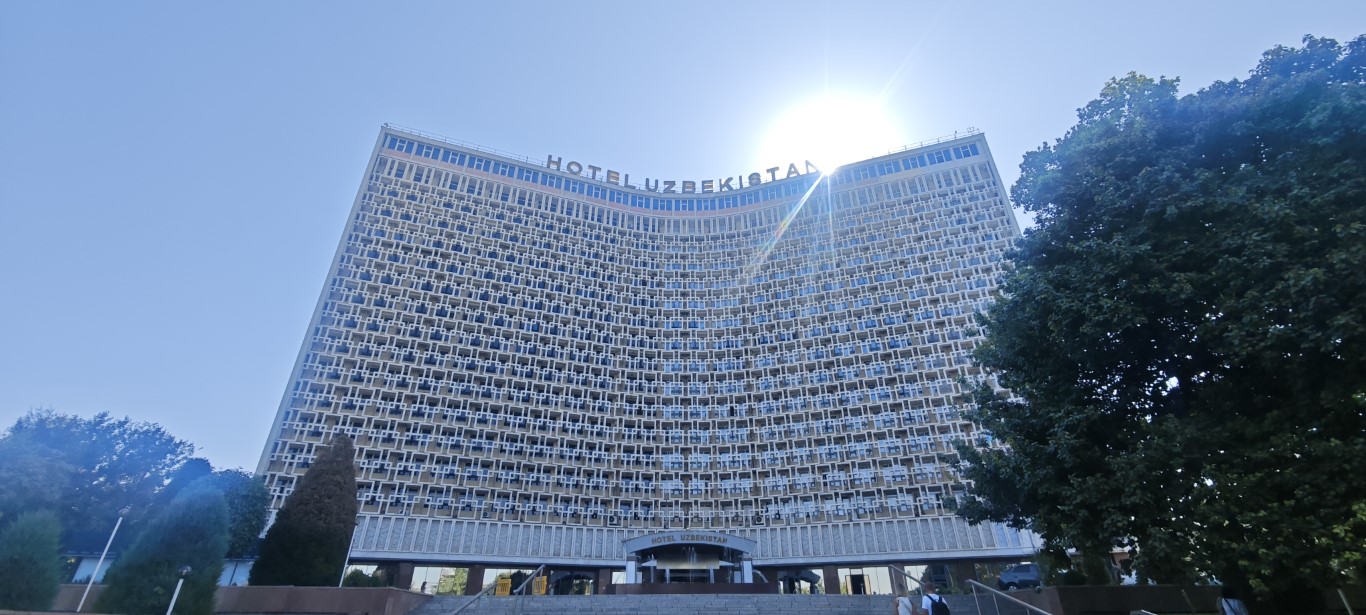
Crossing from Khujand into Uzbekistan takes time beneath the blazing sun. The Tajik side involves long queues and a single building for passport control, while the Uzbek side proves faster but no less chaotic. The final leg to Tashkent feels like a scene from a road movie; crowded marshrutkas, animated drivers, and endless detours through suburban streets before the capital’s skyline finally appears.
After the border crossing, keep the plan compact. Visit Chorsu Bazaar if there is enough daylight, then walk around the surrounding old-city streets or settle near a metro station for the next day.
Day 36 Tashkent
Tashkent has wide boulevards, fountains and manicured parks. Start with the reconstructed Khast-Imam complex, return to Chorsu if the market was closed after arrival, then use the metro to reach Amir Timur Square and the Soviet-era buildings and mosaics around the centre.
The Tashkent Metro, built in the 1970s, has marble halls, chandeliers and individually designed stations. By night, the central parks glow with fountains and soft music.
Day 37 Tashkent to Samarkand
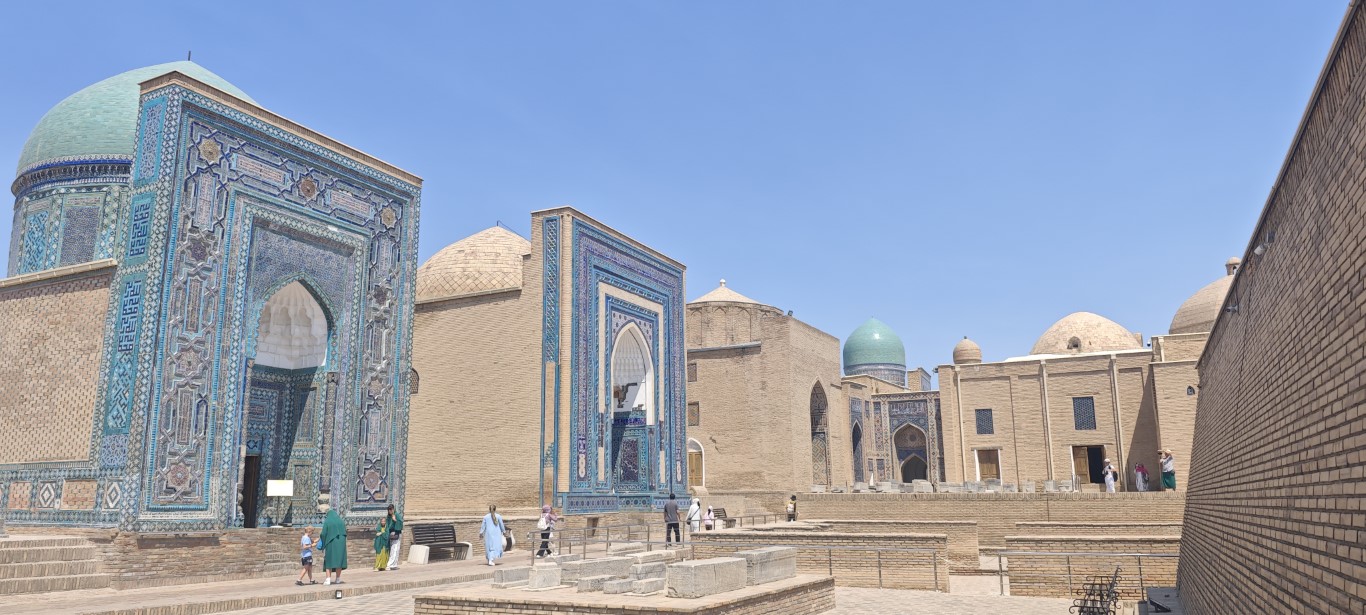
The morning bus from Tashkent reaches Samarkand by early afternoon. Heat shimmers over the city’s turquoise domes, and the Gur‑i Amir Mausoleum rises like a mirage; its golden interior reflecting the ambition of Timur’s empire. A short walk away lies the legendary Registan, three madrassas framing the square with perfect symmetry. At sunset, the tiles flare gold and cobalt, and the evening light‑and‑sound show fills the plaza with theatrical grandeur.
Keep the arrival day around Gur-e Amir and the Registan. They are close enough to visit without crossing the whole city after the bus journey, and the Registan is worth seeing again around sunset.
Day 38 Samarkand
Start with Shah-i-Zinda, then continue to Bibi Khanym Mosque and Siab Bazaar. Use the afternoon for Ulug Beg Observatory and the Afrosiyob Museum, which are farther from the central monument cluster.
As daylight fades, travelers often continue toward Bukhara, a long road west through endless fields and distant mountains.
Day 39 Bukhara old city
Bukhara reveals itself as a labyrinth of sand‑colored walls, minarets, and quiet courtyards. The Po‑i Kalyan complex dominates the skyline, its great minaret once serving as both landmark and legend. Around it, mosques, madrassas, and caravanserais evoke centuries of Silk Road history. The air carries the scent of samsas baking in clay ovens, mingling with the sound of prayers and merchants calling from shaded stalls.
Use the first day for the continuous walking route from Lyabi-Hauz through the trading domes to Poi-Kalyan. These sights are close together and remain easy to revisit after dark.
Day 40 Bukhara
Spend the morning at the Ark Fortress, Bolo Hauz and the sights west of the main old-city route. The afternoon can be used for smaller madrassas, residential lanes and workshops before returning to Lyabi-Hauz in the evening.
Day 41 Road to Khiva
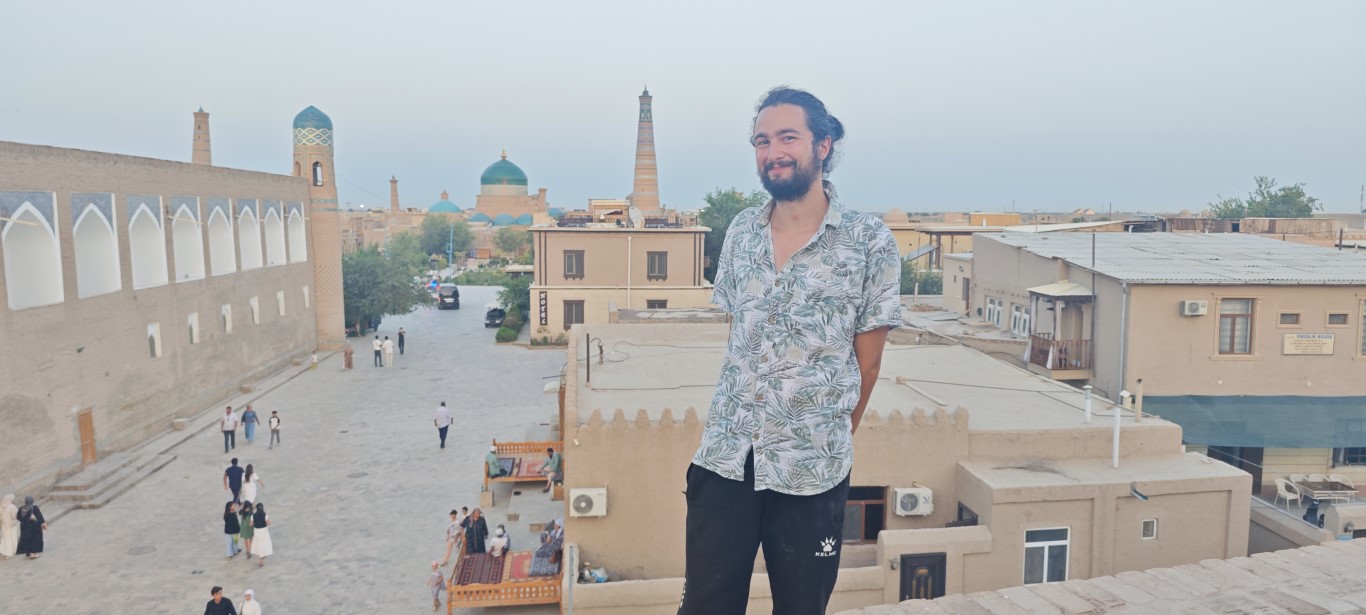
The journey west continues by train through the steppe, leading to the walled oasis of Khiva. The Ichan Kala old town feels almost untouched, a compact maze of alleys, mud‑brick houses, and minarets glowing blue and sand‑gold under the heat. During the Melon Festival, the streets fill with music and parades, locals offering slices of sweet fruit to passing travelers.
After the train and transfer, keep the first visit to an orientation walk inside Ichan Kala. The walls, main gates and Kalta Minor are enough for the arrival day, especially if the train reaches Khiva in the afternoon.
Day 42 Khiva
Within the walls, the Kalta Minor Minaret stands unfinished but striking, wrapped in turquoise tiles. The Kuhna Ark, Tosh Hovli Palace, and countless madrassas preserve the flavor of a desert kingdom. By sunset, Khiva’s rooftops turn copper and rose, and the call to prayer echoes through the silent streets, a moment suspended in time.
Day 43 Nukus
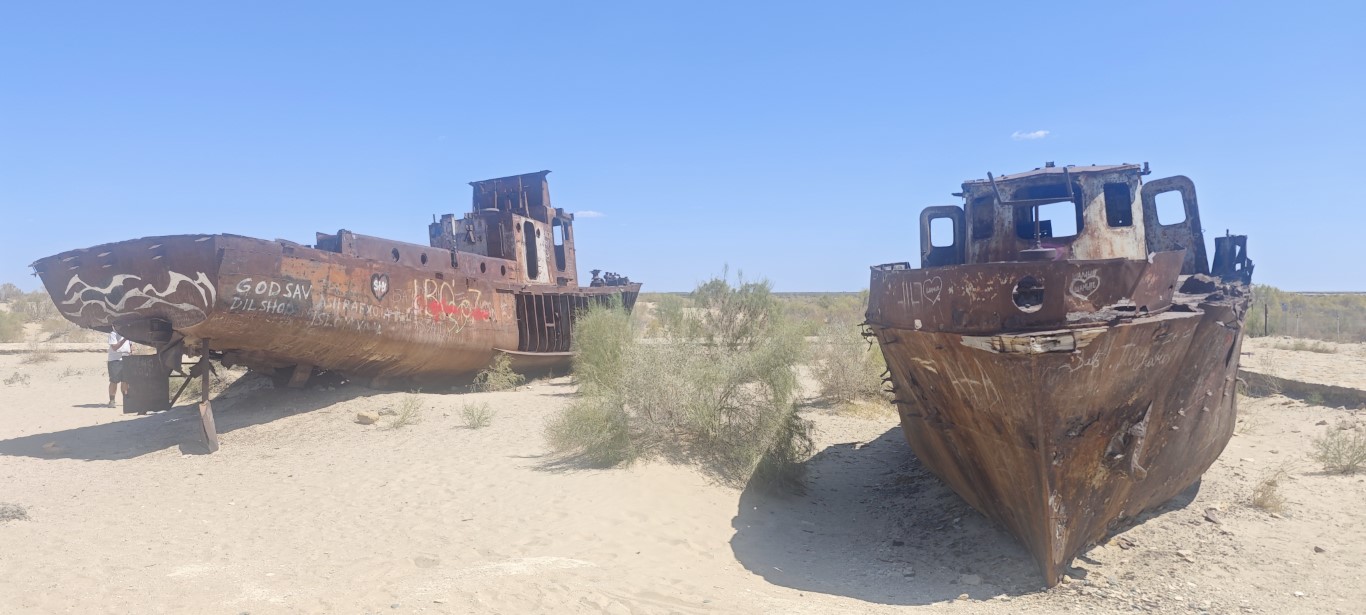
A long drive north leads to Nukus, gateway to the Karakalpakstan region and the once‑mighty Aral Sea. Give the Savitsky Museum several hours for its avant-garde Soviet art and Karakalpak collection. If the arrival time allows, add the city centre or arrange the next day’s driver rather than starting the Aral Sea road immediately.
Day 44 Muynak and the Aral Sea
The drive to Muynak and the former Aral Sea shoreline is a separate excursion from Nukus. The Ship Cemetery tells the story of the ecological disaster through rusted hulls stranded in the sand, while the museum in town adds context before the return drive.
Turmenistan
Tips on how to travel Turkmenistan
The Agency
There are plenty of agencies out there, but I can personally recommend the one and only Ruslan Hydyrov from IndieGuide. He was reliable, quick to answer emails, and knows the system inside out.
Contact:
- Phone: +993 61 67 22 66
- Mail: ruslanhydyrov@gmail.com
If you get in touch, tell him you come thanks to Timothé Paris (that’s me). He’ll know.
Day 45 Konye
First thing first, find your way in the country. I started from Uzbekistan. The logical road used to be UZ-TM-IR nowadays, it’s only possible to go from UZ to TM. So I went to the Shavat border in Uzbekistan, taking a shared taxi from Khiva One hour later I was at the border, filled with Turkmen coming home with their shopping (TVs, PS4, computer stuff, air fryers…).
After a very long and stupid trip (you have to pay a bus to cross 200m through the No man’s land), I reached the Turkmen outpost, met my guide, Ruslan there.
After paying the necessary 100$ or something for the visa, entry and covid test, I was in!
The price is not the same for everyone, check with your guide and our nationality Also, carry a lot of cash with fresh USD notes, it’s mandatory
So, yeah, I got in the country, my guide met me at the border, we got a driver and went all the way to Konye Urgench to see the ruins. Felt a bit meh compared to Uzbekistan, much more ruined and spread out. It’s still nice for history buffs, especially when doing a guided tour, thing I didn’t do back in UZ.
After Konye, we went to Darva- not. Back to the border town of Dashoguz. Yup, the road to Darvaza is not finished from Konye, so enjoy the long detour.
Finally, after a bumpy road that was dreadful, I arrived at Darvaza, the gates of Hell!
We visited at night to see the beautiful flames and the stars.
See the pictures:
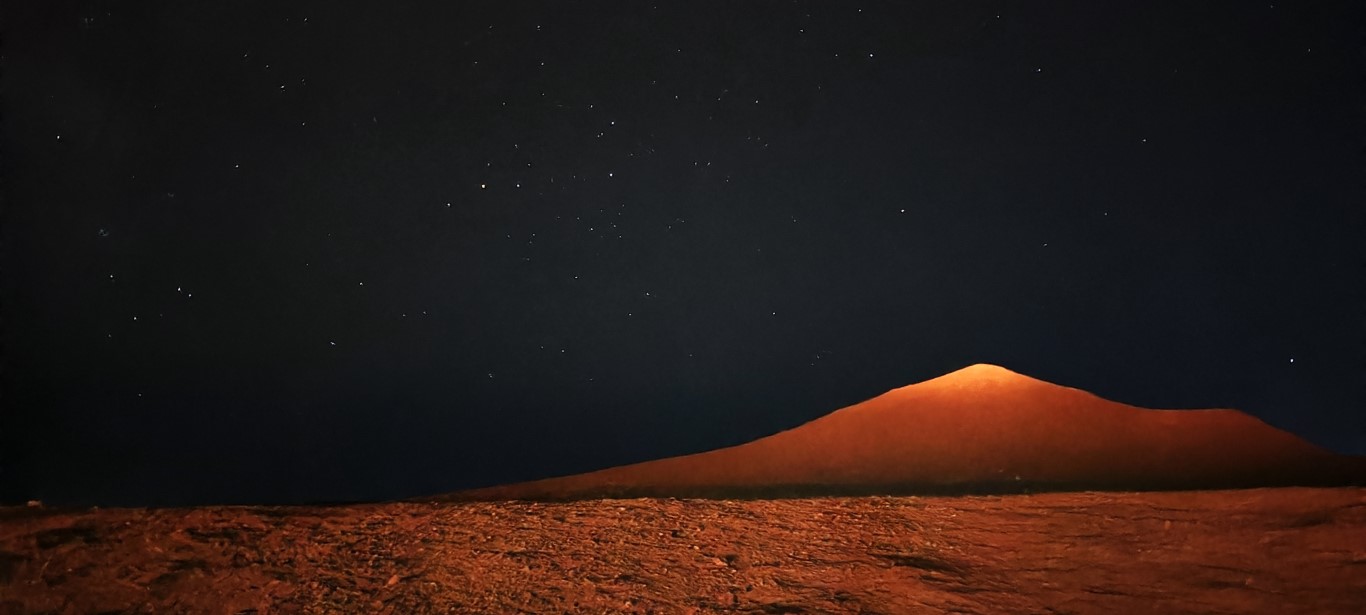
Nice isn’t it?
Day 46 Darvaza
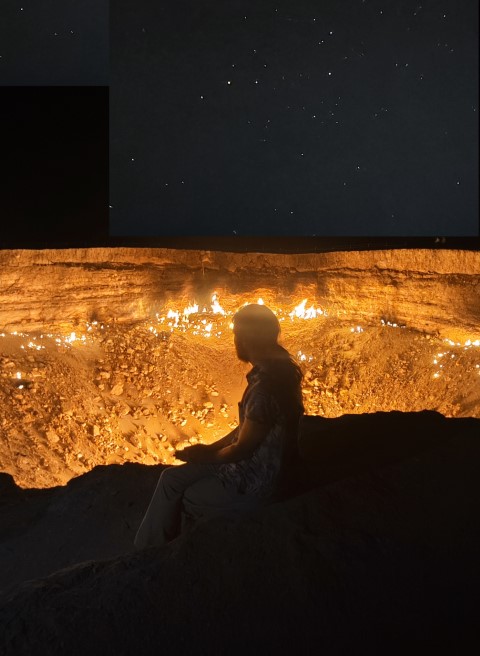
This is a bit mixed with the previous day, sorry.
(After a barbecue and some wildlife spotting, I slept in a Yurt near the crater until sunrise. The Darvaza crater during the day is quite a worrying sight, dying out and not much to boast. The gates to Hell are soon to be just a hole in the desert.
Anyway, we continued, seeing other craters on the way as well as the sand dunes, through the bumpy road. To where? Ashgabat of course.
A city of white marble, of elegance, of rules (And of a ruler), dazzling in the desert. Ashgabat is only missing Aladdin and his flying carpet to be complete.
I thoroughly enjoyed the visit, mostly by car, to the grand buildings and all the center of interests. Everything is so spread apart and most of the touristic attractions are actually outside of the lively city. It’s not a ghost town, just that most things you see on the internet are located near government buildings and near a soon-to-be forest.
At night, the city is also quite lively, I walked freely, met some people, spoke with soldiers, shook I don’t know how many hands, said hi to everyone and well… just enjoyed the city by myself
Day 47 Ashgabat
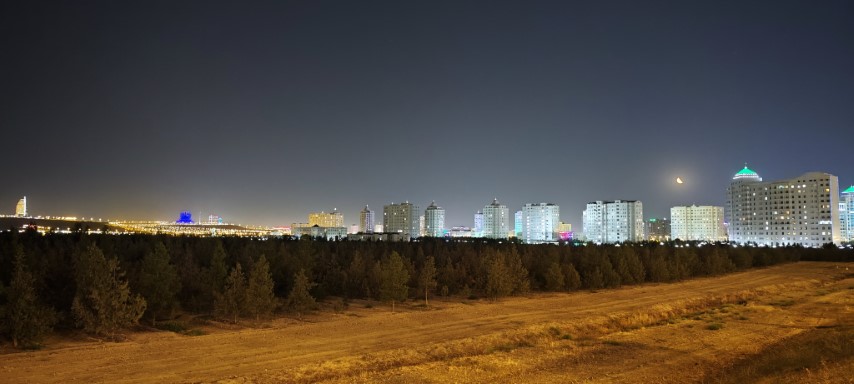
Depending on you tour, you may have more time to have an in depth visit of Ashgabat. I think it’s worth it. The mosque is beautiful and the acoustic is incredible, it’s nice to see the busy train station, the roundabouts deserve their own tour, the indoor ferris wheel is stupid, the marriage center might be where you will find a bride, the station, a bribe… The commercial centers are nice for shopping too, shop for the dried apricots, they are lovely (Best I had so far).
On your way out, admire the airport built like a bird and enjoy the cheap, fixed rate, flights to europe and more. I went Ashgabat-Milano as Paris is not deserved since covid, it was inexpensive for the quality, the only downside was the 100€ bus to go back home. One hundred for a bus, sheesh, what a bunch of loonies. Turkmenistan > Italy.

Comments?
comments powered by Disqus