This was my two-week route from Puno, Peru, through Bolivia and on to San Pedro de Atacama, Chile. The core of it was independent bus travel, Torotoro National Park and a four-day Uyuni crossing.
Affiliate disclosure: This article contains GetYourGuide affiliate links. If you book through one of them, I may earn a commission at no extra cost to you.
Itinerary done quick
Bolivia
| Day | Destination | Notes |
|---|---|---|
| Day 1 | Copacabana | Basilica, lakefront and Cerro Calvario |
| Day 2 | La Paz | Historic centre, markets, cable cars and Cholitas Wrestling |
| Day 3 | Tiwanaku | Ruins and museums, then overnight bus to Cochabamba |
| Days 4–5 | Torotoro National Park | Dinosaur footprints, Vergel Canyon and Umajalanta Cave |
| Day 6 | Road to Sucre | Minibuses via Cochabamba |
| Days 7–8 | Sucre | Historic centre, La Glorieta, museums and La Recoleta |
| Days 9–10 | Potosi | Colonial centre, Casa de la Moneda and Cerro Rico mines |
| Day 11 | Uyuni tour — part 1 | Train cemetery, Colchani and salt flats |
| Days 12–14 | Uyuni tour — part 2 | Incahuasi, lagoons, geysers, hot springs and Chilean border |
Day 1: Copacabana
Here, I assume you started from Peru/Puno, which is what I did. If you didn’t and never saw Copacabana and the islands, I recommend to take 3 days from La Paz, it’s a must!
The direct Puno–Copacabana bus leaves Puno’s Terminal de Buses at 07:00 and normally reaches Copacabana at about 10:30, for about 9€. From La Paz, expect 3€ and 4 hours of driving.
The international bus from Puno stops at both border posts before continuing to Copacabana. Visit the Basilica of Our Lady of Copacabana, the market streets and the lakefront, then climb Cerro Calvario in the late afternoon.
I spent the night the Hostal Resto Bar flor de mi Tierra.
Day 2: La Paz
Buses for La Paz leave from the Copacabana terminal, the journey takes around four hours, including the Tiquina crossing. (Took 3:30 according to my pictures)
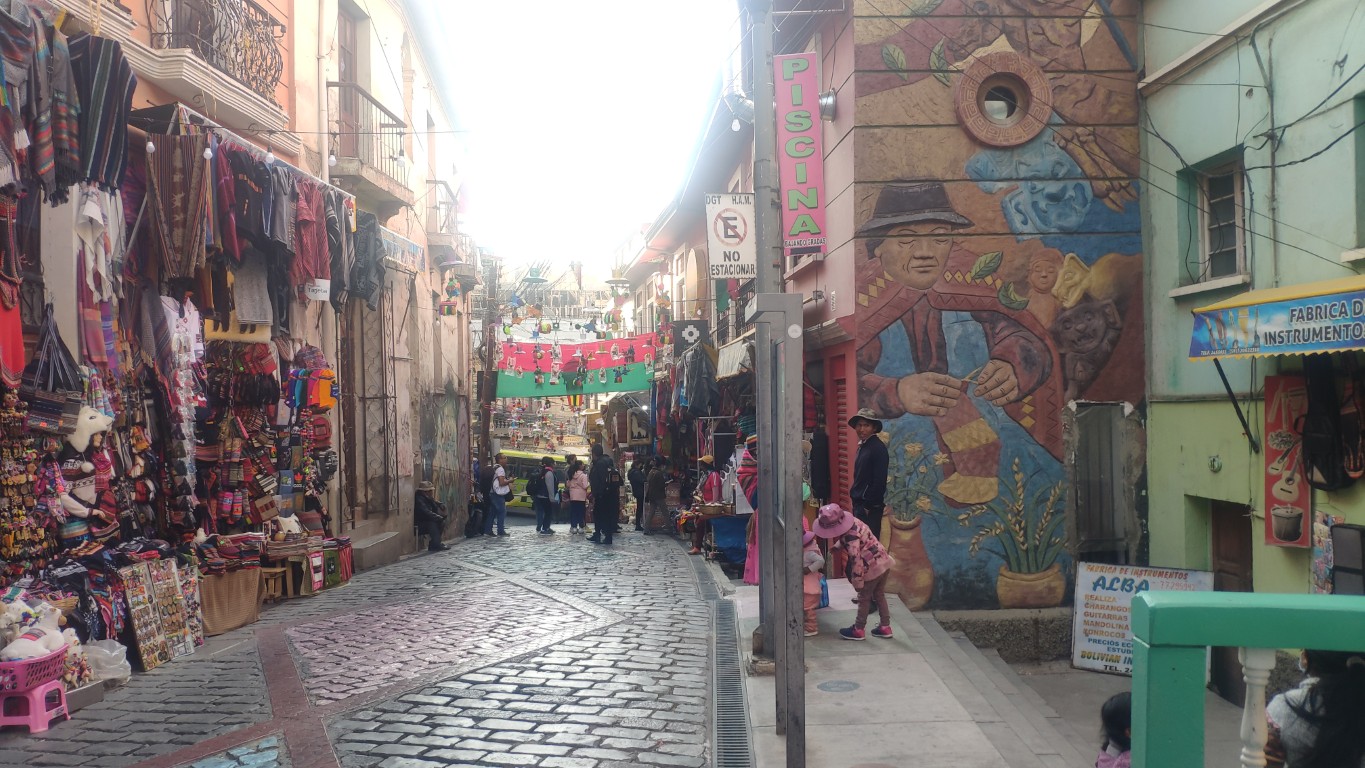
From Plaza Murillo (Prettiest place in the city), walk Calle Jaén, then go down to San Francisco and up to the Witches’ Market on Calle Linares and Santa Cruz. The stalls sell coca, herbs, powders and ritual offerings.
The witches’ market does contain disturbing stuff, bt it’s an unusual sight and really part of the Bolivian culture! (Might be touristy nowadays, when I went, there was basically no one)
The Red Line from Estación Central goes to El Alto. Change to the Yellow or Silver line for the view across La Paz towards Illimani. The first line costs 3 Bs (0,2€); each transfer costs 2 Bs (0,14€).
Going up and around using El Teleferico is part of the fun in La Paz! La Paz is mostly incredible seen from the top and from the air, so do yourself a favour!
Additionally, El Alto has something special and rather unique: The cholets. What’s a cholet? That’s the transformers looking houses with bright colors. It’s a neo-andean architectural style that you don’t see outside of Bolivia; I think that El Alto might have the biggest concentration of them. So… Hop on the red line and walk around to see something new!
In the evening, Cholitas Wrestling in El Alto costs 80 Bs (5,50€) for an independent ticket or around 100 Bs (7€) with return transport. The traditional Coliseo 12 de Octubre shows are Thursday or Sunday. (You can also book this activity with most travel agencies and hostels)
But the best thing is… If you finish your day around El Alto, use this chance to see the wrestling, it’s truly impressive and fun (If you like Catch, and perhaps even if you don’t).
My opinion on La Paz: It’s one of the world’s most impressive city, definitely unique given its scale and structure. Despite that, there isn’t a lot in term of attractions, some street arts, markets and a buzzing life. You certainly need more than a day to feel La Paz & El Alto, but this isn’t the most touristic place either, however you can easily fill 3 days if you love to explore real life.
I slept in Socialtel La Paz (Used to be Selina).
Day 3: Tiwanaku day trip
Shared minibuses leave the Cementerio General area for Tiwanaku, 72 km away. The ride takes 1:30–2 hours and the site gives the minibus fare as 7 Bs (0,50€). The complex is open 09:00–16:00.
Additionally, many tours departs from La Paz and/or are organized by hostels. That’s how I did since I had no proper planning (It happens) and a tight deadline.
Entry is 100 Bs (7€) for foreign visitors, including the museums. The site includes Kalasasaya, the Gate of the Sun, the Semi-Subterranean Temple and Pumapunku.
This Tiwanaku tour from La Paz (affiliate link) covers the ruins and museums. I used local transport, not this operator.
It’s a fun architectural day trip and it’s a bit different from Peruvian/Incan ruins, if you visited Peru before, you won’t be disappointed, it’s not similar. If you didn’t, you have to (should?) do it!
Since Tiwanaku closes early, you’ll return early too. So… Either you have more time in La Paz, or you can use a night bus to continue the trip.
I was a bit tight in my planning; More time in La Paz would have been better but I went on to Cochabamba, towards Torotoro.
Next destination? Buses leave from the Terminal de Buses de La Paz on Avenida Uruguay.
I left La Paz, around 22:00, after walking some popular routes with street arts and after dinner.
So… From La Paz to Cochabamba, the journey takes about eight hours; Departures start around 20:00 and continue all the way to 04:00.
There are many operators doing the routes (So each hour can mean a different operator), they have basically the same prices, comfort and speed.
(Note: Even the more “luxurious” options are not that much nicer, in the end, a bus is a bus)
Day 4 & 5: Torotoro National Park
IMPORTANT, LET ME STATE THIS RIGHT AWAY: THERE MIGHT BE NO ATM in TOROTORO! I remember one, old and beaten up, if there’s only one, don’t expect it to have cash, so bring enough!
I arrived in Cochabamba around 06:00.
Then, I spent no more than three hours in Cochabamba: enough to arrive eat, walk around and find the shared minibus for Torotoro.
The minivans leave from Avenida República, near Avenida Barrientos (the La Cancha side of the city), they leave when the seats are full, the drive last 6 hours and cost around 5€ (IIRC).
I arrived in Torotoro exactly at 14:45 (I took a photo right after arriving and used the timestamp to find this data, ain’t it smart?)
In Torotoro, register at the national-park office; guides and groups are arranged there. You have to buy the park ticket there: 100 Bs (7€) for foreigners, it lasts four days. So… you can find groups for the next days, meet the rare visitors and plan your trip.
A certified guide is required for all interesting trips. One guide takes up to six people and costs 200 Bs (14€) per group. (I found this data online, stc), you form groups usually in the morning, but some departs around 14:00, Since I came a bit late, a group already departed an hour before.
So, on my first day I did the dinosaur-track, canyon and waterfall circuit, which takes around five hours. It goes from the canyon rim down steep stairs and rough paths to the El Vergel waterfalls and pools, then climbs back out. Quite scenic, quite nice.
Note: Torotoro is a boring small town, there isn’t many things of interests, just a few dino heads and statues. You have to go out. So once back, just chill!
The next day, I went to do something more interesting, and this time not alone (We were enough travellers that we had to split in two groups)
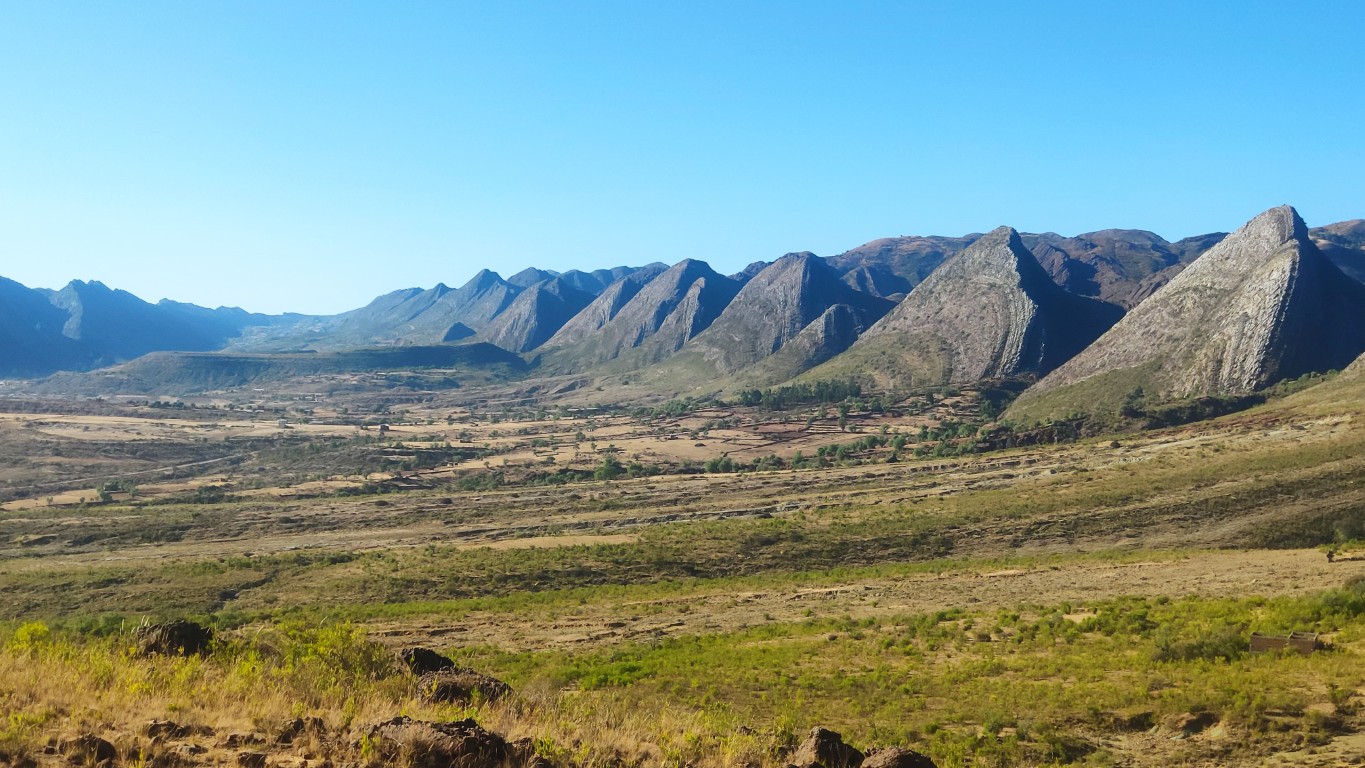 ^Spoiler: The Dino Scale landscape
Let’s go see the landscapes and the famous Umajalanta Cave!
One of the main reason for coming to Torotoro (outside of the dino footprints and themed city), the caves are 10 km from the village and the guided trip lasts around 7 hours.
Fun fact, the caves do appear on one of the Bolivar bill!
The park gave us a helmet and light. We crawled through low passages, passed the rock formations and saw the cave’s blind fish. The visit inside takes close to three hours.
It was fun, but I won’t do it again. Spelunking is scary, difficult, and a once in a lifetime experience. This specific one was on the safe and easy side. Not like the Devil’s asshole caves or whatever where people get stuck and die.
You also do a few stops along the way (in a car) to see the viewpoints and the rocky areas (including some walking).
After this experience, I took a well needed shower, spent time with basically all the tourists in town (Exactly 10 tourists, including myself) then slept for my last night.
Also, I slept in Hostal Margaritas.
Fun story, I shared my bed (A single room, IIRC) with a stranger, because it was full, apparently, and the owner (A woman with a very tiny baby and kids, handling everything by herself) didn’t realize she was overbooked. It worked out well and I went to the Uma caves with that belgian tourist the next day.
Day 6: Road to Sucre
This day is the long day, Torotoro is quite the detour.
I took the shared minibus back to Cochabamba, starting early in the morning.
Around 13:00, I was back in Cochabamba. Then the bad news: From Cochabamba’s Terminal de Buses, current buses to Sucre leave around 21:00–21:30. So very late!
(They arrive at Sucre’s Central de Autobuses around 05:30–06:30: an eight- to nine-hour trip)
Of course, there are not the only solutions, minivans leave when full, with morning departures and early afternoon ones. One departed before coming, so I was told to wait an hour or so. I spent an hour walking the old streets of Cochabamba then hopped on the 14:00 minibus. Luckily it was quickly filled.
Cochabamba is not an interesting city, an hour felt good enough to see the old core.
I arrived in Sucre around 21:00. (So the minibus was 7 hours long, faster than the bus), in time for my sleep in the very nice Oropeza Hostel. They have ping pong tables. Factor that in. And a garden. I loved it.
Day 7 & 8: Sucre
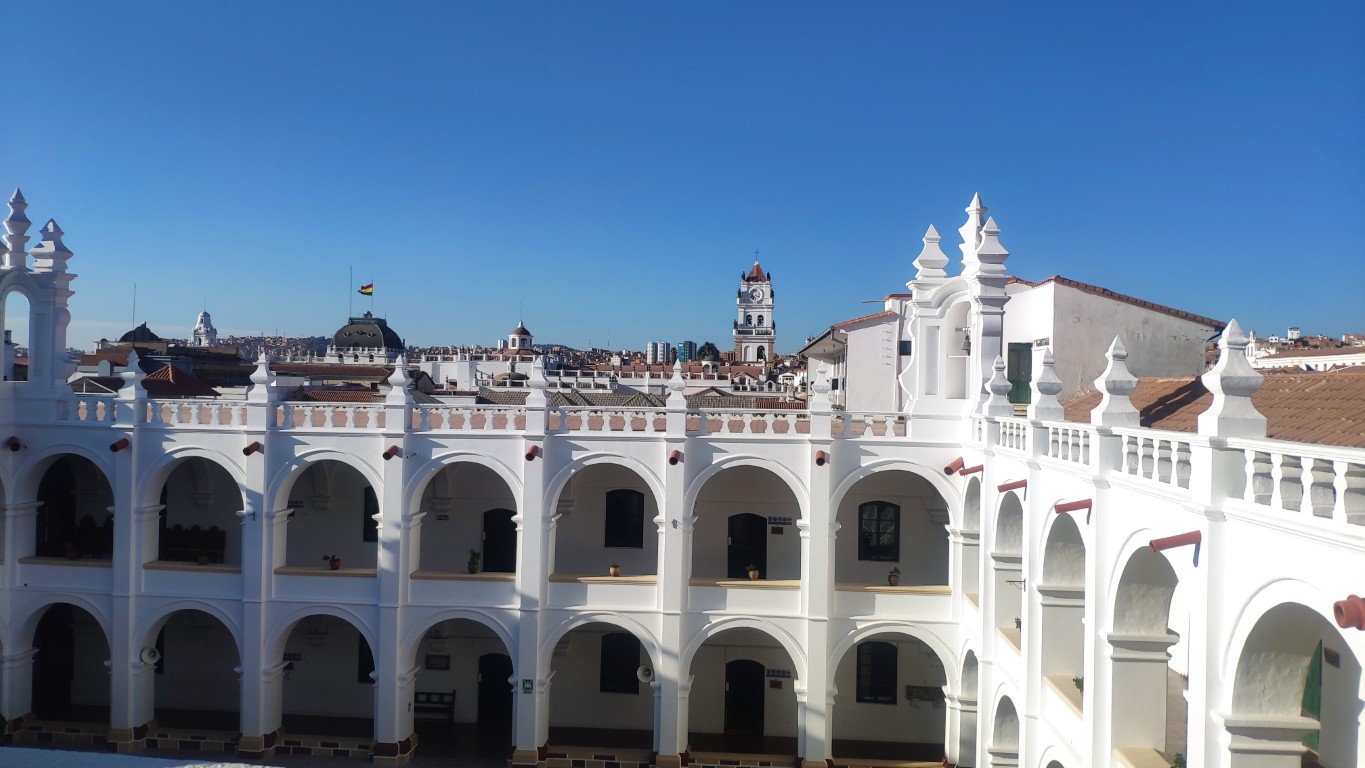
Honestly, Sucre is beautiful. Just walking around and enjoying the white buildings is a blast.
I recommend spending a chunk of the morning just walking around, rather than chasing spots after sports, get a feel of the city.
Then, once it gets hot around noon, head to Casa de la Libertad, on Plaza 25 de Mayo, is where Bolivia’s declaration of independence was signed in 1825. Very interesting.
(It is open Monday–Friday 08:30–16:30 and Saturday–Sunday 09:00–13:00. Foreign entry is 50 Bs (3,50€))
From the plaza, walk to San Felipe Neri for its rooftop, one of the best place to see Sucre from the top (also works for sunset, but might be crowded) then continue to the General Cemetery for its arcades, mausoleums and flower stalls. I know it’s a weird rec, but the cemetery is a real work of art.
I was dead tired, so went to sleep early. More time means more walking in Sucre, there are some signage and walking itineraries you can find easily online or onsite.
So for another day, my recommendation is to see something unique: El Castillo de la Glorieta.
This fantastic castle sits 5 km outside Sucre on the Potosí road. Take Line 4 from Mercado Central or Avenida Hernando Siles; the castle is the last stop, and the same bus returns to the centre. The return trip and visit took around 4:30.
Francisco Argandoña and Clotilde Urioste built the castle as their home. Pope Leo XIII later made them Prince and Princess of La Glorieta. That is why there is a princess castle outside Sucre. The towers mix Gothic, Russian and Chinese styles.
It is a strange mix of styles, with different towers for the prince and princess, really unique.
Back in town, I went to the Museum of Indigenous Art (A really colorful building, an old colonial house used as a interesting art gallery, plan at least an hour), then walked up to La Recoleta.
La Recoleta is a Franciscan convent founded in 1600. Its museum includes cloisters, an old choir and the Cedro Milenario, an ancient cedar in the garden; the white arches across the square are the lookout over Sucre.
Day 9 & 10: Potosi
I took a morning shared minivan from Sucre’s Central de Autobuses to Potosí.
They run through the day, often every 30–60 minutes when there are passengers, and take about 2:30 to Potosí’s Nueva Terminal.
From there, I walked into the centre and began at Plaza 10 de Noviembre. The cathedral faces the square; it is a good place to stop first and get a sense of how close together the old centre is.
From the plaza, I headed south to San Francisco. Its terrace looks towards Cerro Rico, which makes the mining city’s geography suddenly obvious. I then came back through the centre to the carved façade of San Lorenzo de Carangas, before passing the Torre de la Compañía de Jesús.
I finished at the Casa Nacional de la Moneda. Allow time for the guided visit rather than treating it as a quick exterior stop: it covers the colonial mint, the machinery used to strike coins, paintings and the history of the silver taken from Cerro Rico. The whole central loop is short on a map, but the steep cobbled streets and Potosí’s altitude slow it down.
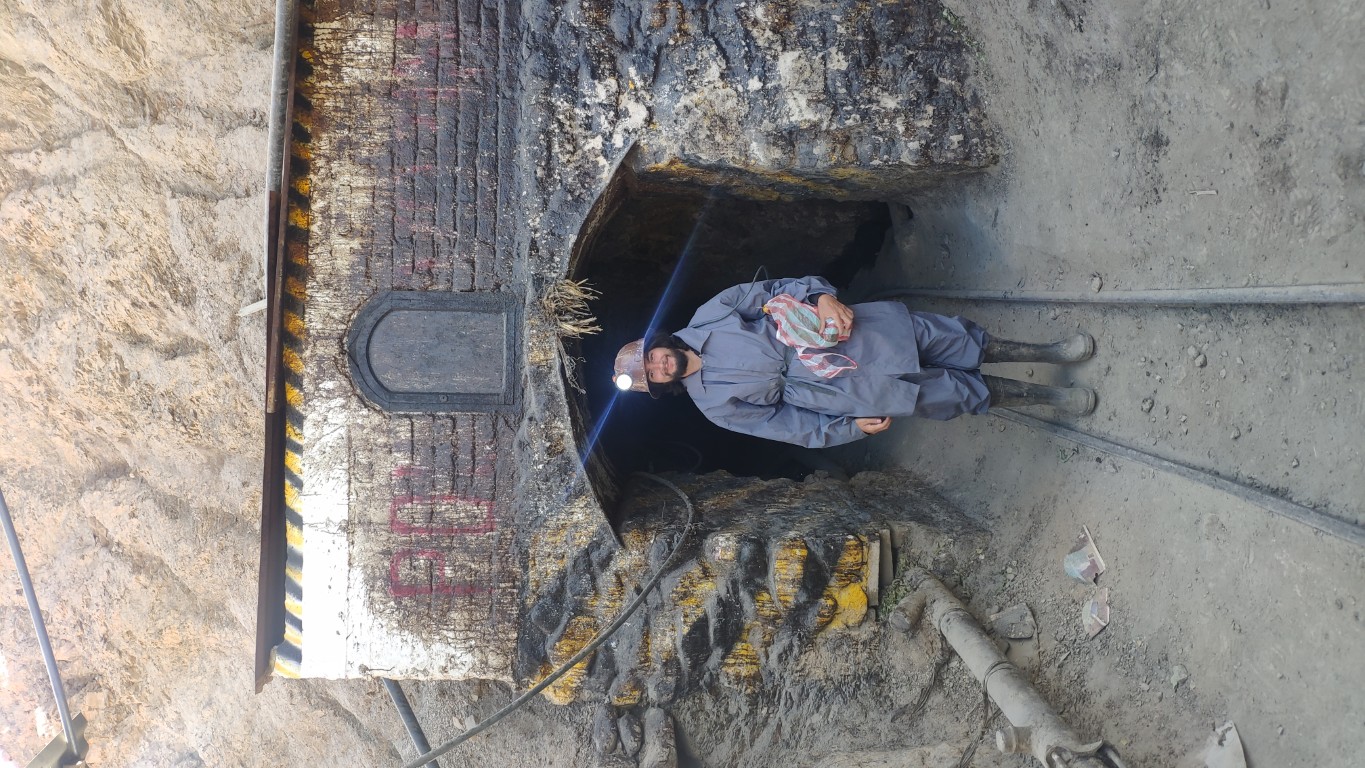
The next day I joined a tour into the Cerro Rico mines. It began at the miners’ market, where people buy coca leaves, alcohol and dynamite for the miners, then continued up the mountain with the protective clothing supplied by the agency. Inside, the route went through the galleries and past mineral veins, work areas and the figures of El Tío kept by the miners underground. Also, the mine is very much in use, so you encounter a lot of miners, digging for scraps!
Current half-day mine tours generally cost 100–180 Bs (about 7–12€) per person, including the guide, helmet, lamp, clothing and boots. The coca, drinks or dynamite bought at the miners’ market are separate, usually another 25–30 Bs (about 2€) if you choose to contribute them.
This Cerro Rico guided mine tour (affiliate link) is a bookable alternative. I did not use that specific operator.
Back in the centre, visit the Santa Teresa Convent Museum if the tour returns early enough. Take the evening bus to Uyuni and sleep in town before the four-day tour (A must!)
From Potosí’s Nueva Terminal, there are also buses at 16:00, 17:00 and 18:30 to Uyuni. The later service arrives at about 22:30.
I arrived at night, before staring my tour. I slept in Piedra Blanca Backpackers, quite basic, but enough for a night.
Day 11: Uyuni tour - part 1
My four-day Uyuni trip was booked directly in Uyuni; I walked around and found the best deal (not the cheapest one, but rather cheap. In retrospect, paying a bit more wouldn’t have been bad, especially for the night’s accommodations).
The first day began at the train cemetery and Colchani, we went on some islands, saw the reflections in the salt plains and return to Uyuni for the first night. Sounds weird, but this is an extra day that can be a bit of a standalone; Then I joined another group for the rest of a trip.
The vehicle, driver and remote accommodation were included, obviously.
This four-day Uyuni and Atacama tour from La Paz (affiliate link) also ends in San Pedro de Atacama. It is not my exact route.
Note, If not going to Chile, take a three day tour instead, then, the next day can be used to return to La Paz, which is a long trip through El Altiplano
I didn’t take this one, but for convenience (And to finance the server cost of this website)
Day 12, 13 & 14: Uyuni tour - part 2
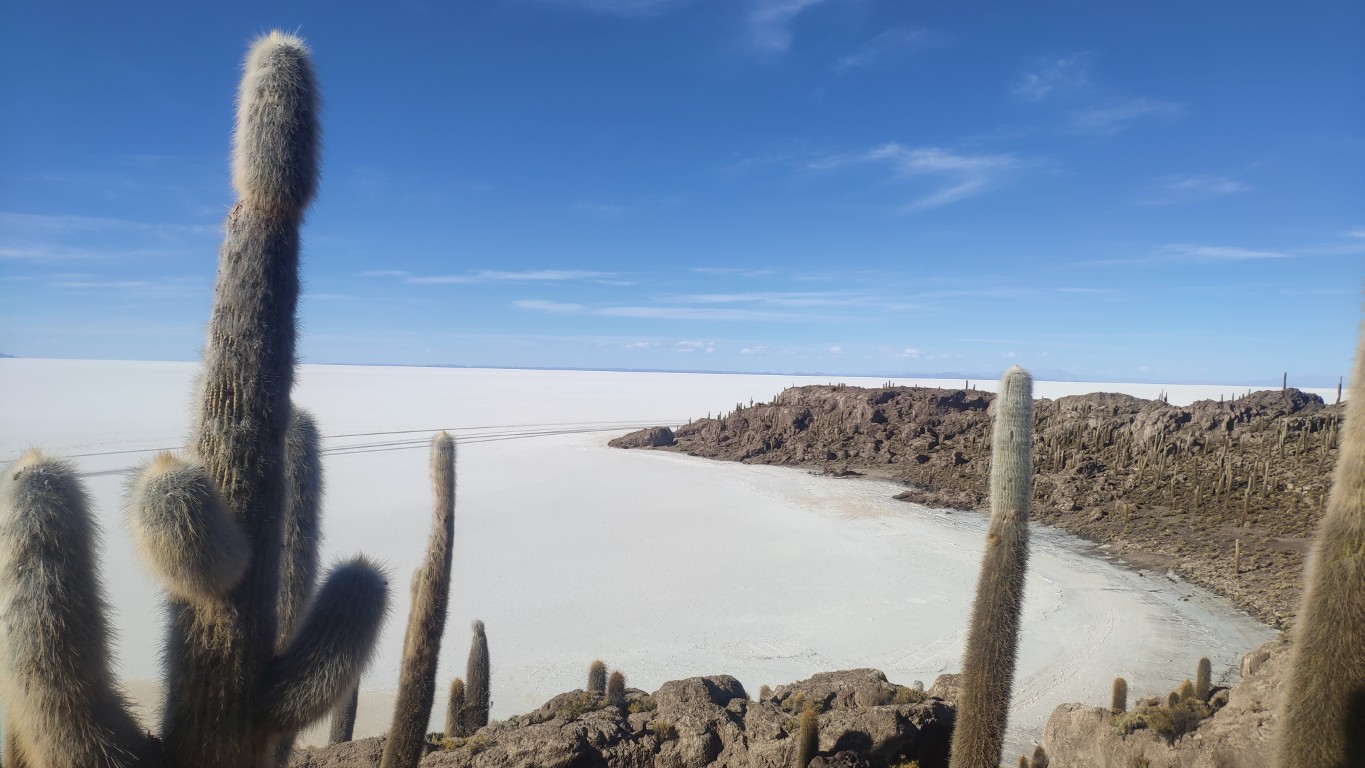
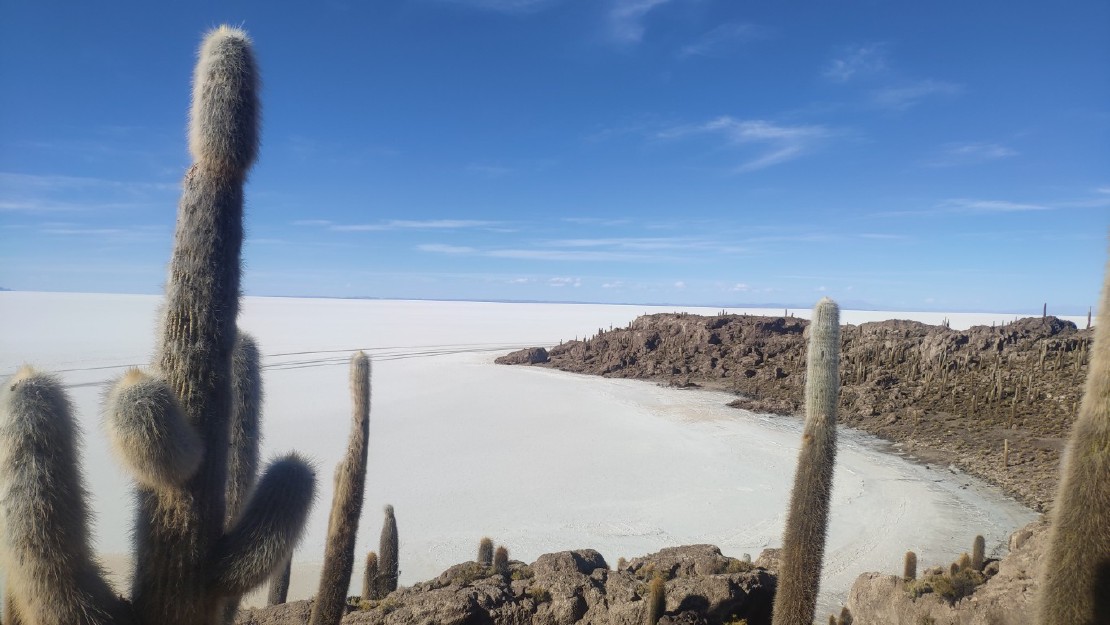
The day included the Ojos de Agua Salada, the old salt hotel, perspective photos on the salar and Incahuasi Island. Incahuasi, with its giant cacti and view over the salt flat is quite the view. The photo shooting was really fun too, taking a couple of hours for photos is really something I wasn’t set on doing, but ended up joining in the fun! We watched sunset on the salar before driving to the night accommodation.
Incahuasi is absolutely stunning! It’s my personal highlight of Uyuni; just for that, it’s worth it.
Note: At night, in August, it gets crazy cold. Accommodations are barely heated. It was very cold nights, not really comfortable. The deeper you go the colder it gets.
The next day, we went deeper:
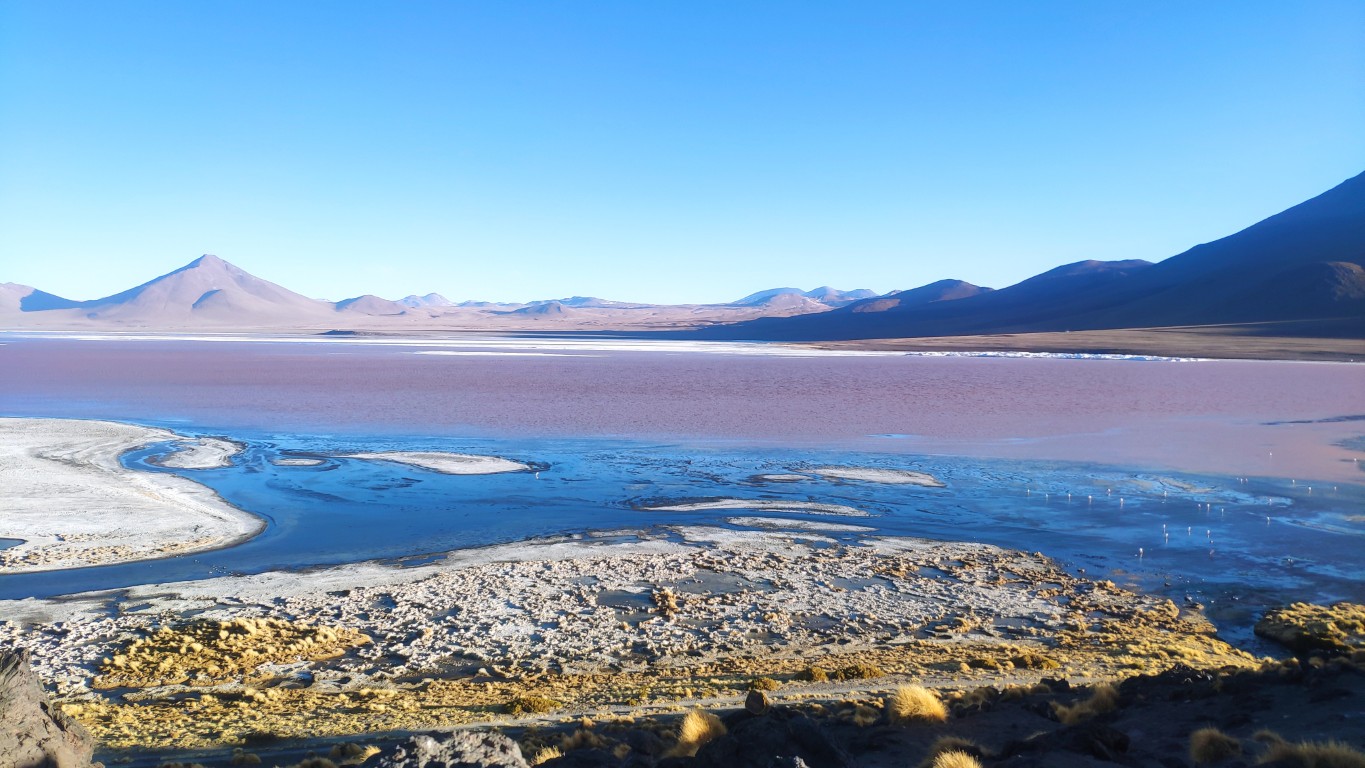
The route left the salt flats behind for the high desert of the Eduardo Avaroa reserve. We stopped at the Cañapa and Hedionda lagoons, where flamingos feed close to the shore, then crossed the open Siloli Desert to the wind-shaped Árbol de Piedra. The last major stop was Laguna Colorada: its red water, white mineral edges and huge flamingo population were completely different from the white salar of the day before.
It’s a long day of driving, but a really beautiful one! You get out of the salt flats to more stunning sceneries a bit further. But it gets even colder, even during the day, it wasn’t much more than 8°C. And the nights were colder than -10°C. I went to see the stars at night, it was close to -15°C!
Note: I have a picture of myself out with just a t-shirt and my belly exposed, lol, to be young again!
For the last day, we left before sunrise for the Sol de Mañana geysers and hot springs, then continued to the border above San Pedro de Atacama and changed into the Chilean minibus included in the booking.
For trips ending in Chile, the final morning reaches Hito Cajón after Laguna Verde; after exit formalities, the shuttle to San Pedro de Atacama takes roughly 45 minutes.
Now, for the fun story, because you folks love them. Well. Once upon a time (early August, day 14 of my Bolivian trip and 5 weeks in SA), I went to the springs. I don’t go in water, so I just wanted to put my feet in. Guess whose retarded ass fell (clothed) in the water? And whose idiot clothes got frozen while removing them and putting them outside? That also triggered almost instant stomach cramps; I suffered badly. I even forgot my phone while leaving and had to pay the taxi driver an unreasonable amount of money so he could go back five minutes (or less) to retrieve it; because: “We aRe goInG tO Be LaTe for tHe bORdeR.” Lies — and the guy was 10 minutes late too. Now you can laugh. Btw, there are no toilets at the border, before it, or past it. Last ones are in the hot springs.
I entered Chile as this point. Some people do return to Uyuni. If your trip lies entirely in Bolivia, the Uyuni tour is 3 days long and you use Day 14 (this one) to return to La Paz for your flight.
More days?
Isla del Sol is the natural extension from Copacabana. Boats leave the Avenida 6 de Agosto pier from the morning onward, take about 90 minutes, and start from 10 Bs (about 0,70€). The island has no roads: an overnight stay allows time to walk between the southern ruins, the Inca stairway and the northern side instead of turning straight around with the day boat.
An additional La Paz day can cover the Valle de la Luna, a longer Mi Teleférico ride through El Alto, or the central museums.
Rurrenabaque adds the Pampas or Madidi to an otherwise high-altitude route. It needs at least three days; from La Paz, the flight takes 45–60 minutes, while the bus takes about 18 hours each way.
Tupiza is a southern extension from Potosí, with red-rock canyons, horse riding and a slower route towards Villazón and northern Argentina.

Comments?
comments powered by Disqus